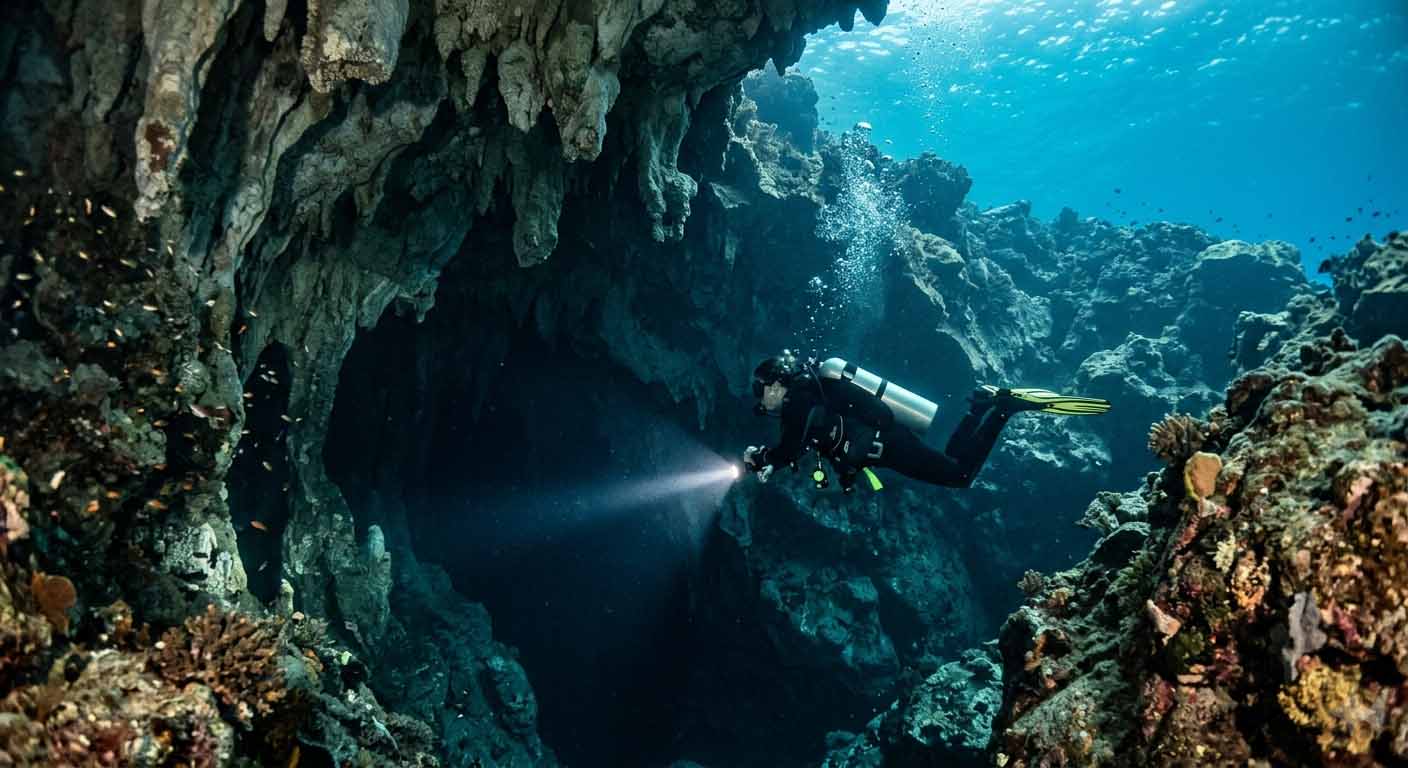

Subterranean Secrets: Diving the Mysterious Sea Caves of Punta Diwata
Below the rugged headland of Punta Diwata, the seabed falls away into blue silence. Divers descend beside limestone, coral terraces, and dramatic deep drop-offs before discovering the entrances to sea caves that remain largely unexplored—dark invitations etched into the coast of Agusan del Norte. Diving Punta Diwata Caves.
Descending Into Punta Diwata’s Hidden Caves
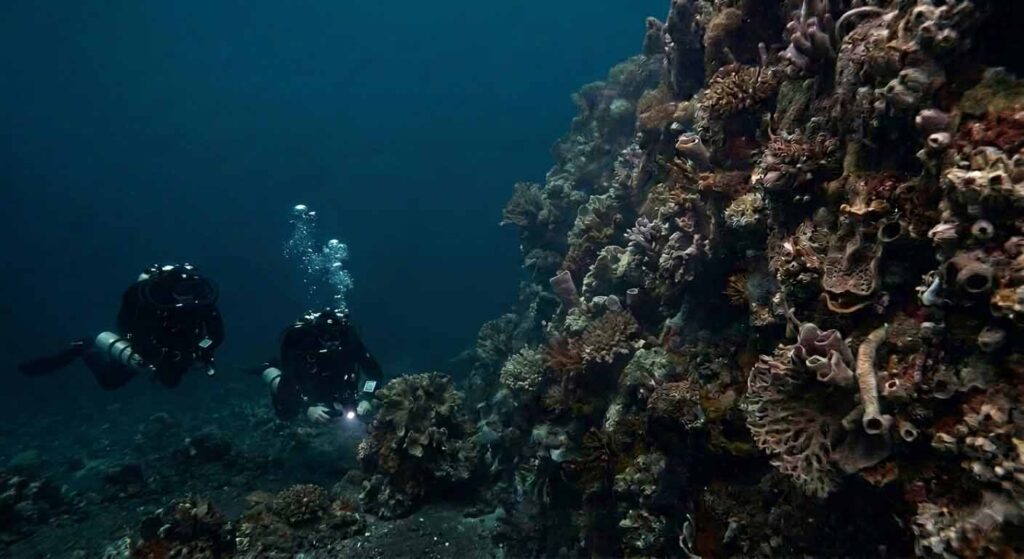
The adventure begins in open water, where tropical sunlight illuminates reef fish weaving through hard corals. As the headland slopes downward, rock faces become steeper, ledges deepen, and shadowed openings appear along the limestone.
Some entrances are broad caverns with visible exits; others narrow into genuine overhead environments. This distinction matters. A recreational diver may inspect a daylight zone, but penetrating beyond it demands cave-specific training, redundant equipment, and disciplined gas management.
Approach slowly and let your eyes adjust. Even outside the caves, Punta Diwata’s topography creates a cinematic scene: fractured walls, coral-covered shelves, deep channels, and blue water stretching toward the trenches of Butuan Bay.
Because these sites are not extensively mapped, local knowledge is essential. Conditions, visibility, currents, and accessibility can change, so every descent should be planned with a qualified operator familiar with the Carmen coastline. Try Diving Punta Diwata Caves.
Where Coral Daylight Fades Into Cave Twilight
Crossing a cavern threshold transforms the dive. Brilliant reef colors fade into muted browns, reds, and golds, while torch beams reveal cup corals, delicate sponges, crustaceans, and small nocturnal fish occupying the limestone.
Excellent buoyancy is non-negotiable. A misplaced fin kick can disturb fine sediment, reducing visibility within seconds. Divers should use controlled frog kicks, keep gauges streamlined, and carry at least one dependable primary light plus appropriate backups.
Inside, the water can feel hauntingly still compared with the surge outside. Exhaled bubbles roll across the ceiling, darkness absorbs the reef’s usual movement, and every formation seems amplified by the narrow cone of light.
The contrast is especially striking after visiting the bright Cahayagan Sanctuary nursery, where juvenile fish shelter among sunlit corals. Together, the two environments reveal the remarkable ecological range hidden within Butuan Bay.
Deep Trenches and the Megamouth Shark Mystery
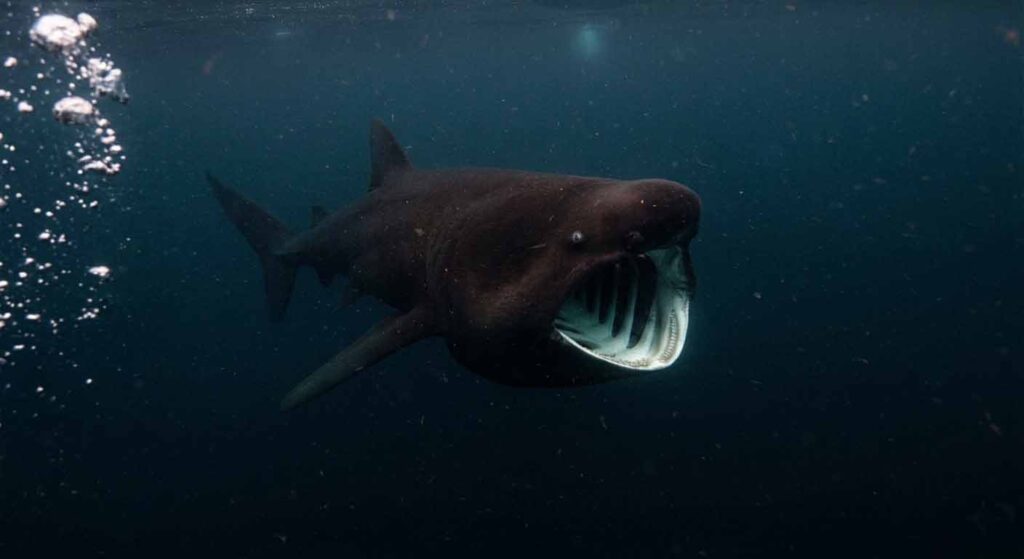
Punta Diwata’s caverns form part of a larger geological story. The peninsula’s limestone edges meet steep underwater slopes and deep channels, creating connections between shallow coastal habitats and the dark pelagic realm beyond recreational depths.
That geography adds intrigue to the Agusan del Norte megamouth shark mystery. This elusive filter-feeding shark normally inhabits deep water, making any regional encounter a tantalizing reminder of how little is known about the bay.
There is no promise of seeing a megamouth on a dive—and responsible operators should never suggest otherwise. The fascination lies in possibility: deep-water upwellings, trenches, and nutrient movement may occasionally bring unusual marine visitors closer to the coast.
For technical divers, these depths are compelling but unforgiving. Mixed-gas planning, decompression procedures, surface support, and conservative turnaround limits must take priority over curiosity, especially near walls or cavern systems.
Planning a Multi-Day Butuan Bay Dive Adventure
Day One: Begin with orientation dives and check equipment, weighting, trim, and local current behavior. Experienced divers can then ride the currents at Bolihon Point, enjoying a dynamic introduction to the area’s reefs.
Day Two: Focus on diving Bohilon Point in Carmen before making a carefully planned cavern dive at Punta Diwata. Confirm weather, tides, guide ratios, emergency procedures, and the limits of each diver’s certification.
Day Three: Add a deeper profile through the Balate Wall adventure. Its vertical scenery suits advanced divers, although depth, nitrogen loading, and repetitive-dive exposure must be monitored conservatively.
Day Four: Finish gently and dive with sea turtles at Tagcatong Marine Sanctuary. A relaxed sanctuary dive provides a colorful finale while allowing the group to reduce intensity after several demanding days underwater.
Cave Diving Safety in Carmen and Butuan Bay
A cavern with visible daylight is not automatically harmless. Changing visibility, disorientation, equipment failure, entanglement, and unexpected restrictions become far more serious when a direct vertical ascent is impossible.
Certified cave divers should follow established protocols: maintain a continuous guideline, carry redundant lights and gas systems, use the rule of thirds where appropriate, and preserve enough reserve for delays or assisting a teammate.
Recreational divers must remain within their training and avoid entering passages where daylight or a clear exit is lost. Never rely on bravery, a single torch, or an uncertified companion in an overhead environment.
With proper preparation, Carmen and Butuan Bay offer an extraordinary underwater playground of reefs, walls, currents, caverns, and deep-water mysteries. Respect its limits, choose qualified professionals, and let safety turn exploration into a story worth bringing home.
Punta Diwata’s shadowed chambers prove that some of the Philippines’ most powerful adventures begin where sunlight disappears. What is your favorite cave or cavern dive? Leave a comment with your story, and share this article with a diver ready to explore Butuan Bay responsibly.