A Quieter Side of the Philippine Dive Map
Carmen sits along a quieter stretch of Agusan del Norte, where coastal villages face the rich waters of Butuan Bay. This uncrowded setting offers a refreshing alternative to established tourism centers, as shown by Carmen’s place within Butuan Bay. Comparisons with hidden alternatives to crowded biodiversity capitals. See our related post of a 5 day carmen scuba diving itinerary.
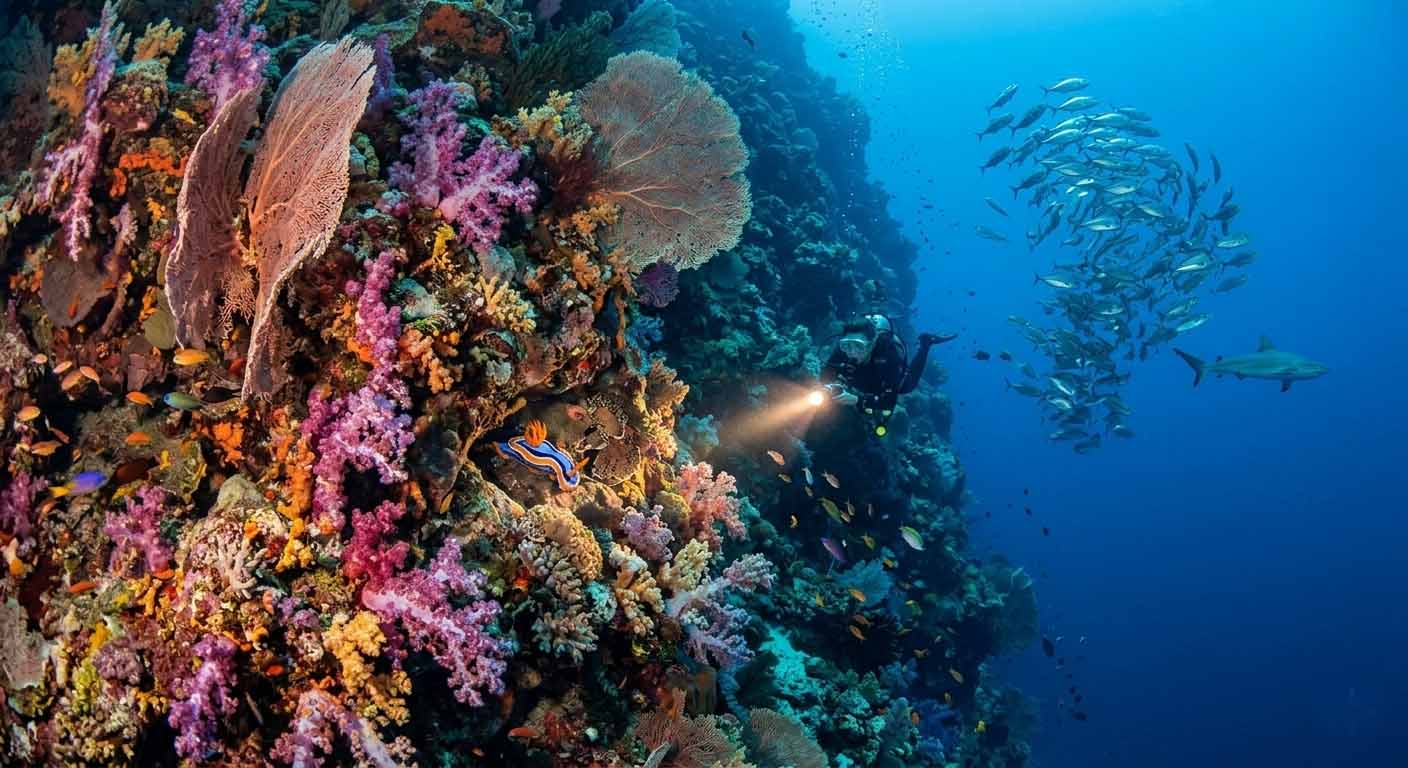
For certified divers, diving the dramatic balate wall is the defining adventure. A descent beside coral-covered rock that falls sharply into deep blue water. The hidden-depths dive layout captures the exploratory appeal, while off-the-beaten-path Philippine island inspiration. It helps place Carmen within the country’s broader adventure-diving scene.
Unlike Boracay and other high-traffic destinations, Carmen rarely feels hurried above or below the surface. Divers researching regional PADI destination profiles can pair that wider perspective with regional dive-site choices for different experience levels.
The attraction is not simply solitude; it is the chance to observe a functioning tropical ecosystem without a queue of dive boats overhead. Broader global marine biodiversity reporting provides useful context for understanding. Why reefs, walls, mangroves, and nursery habitats must be protected as connected environments.
Exploring Balate Wall’s Vertical Seascape
Sheer Drop-Offs and Small-Scale Discoveries
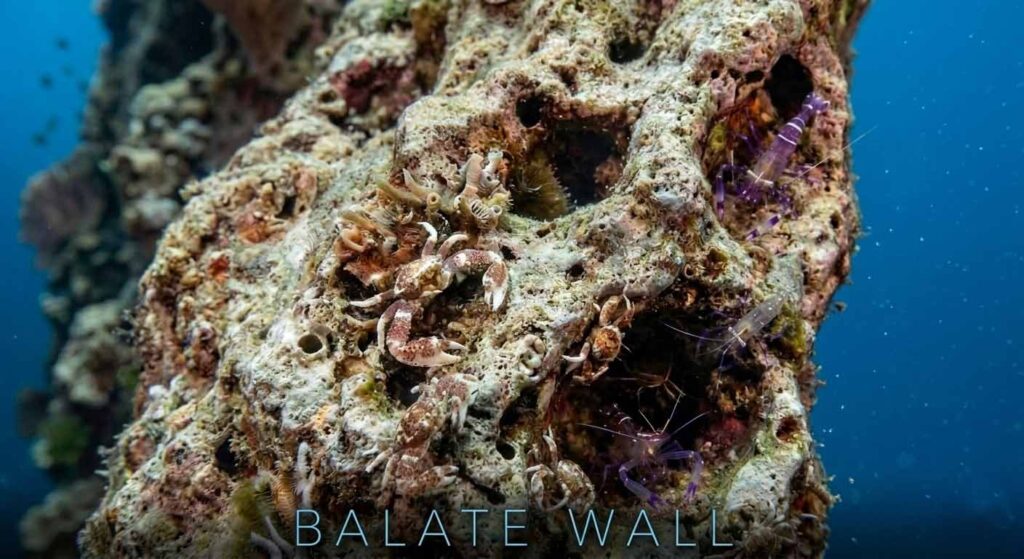
The first impression when diving the dramatic balate wall is its scale. The reef edge appears to fold away beneath the diver, creating a vertical corridor of ledges, crevices, and shadowed overhangs. Butuan Bay Scuba’s overview of the vertical dive experience helps divers anticipate a profile where buoyancy and depth awareness matter as much as sightseeing.
Moray eels peer from cavities while nudibranchs, shrimps, blennies, and other macro subjects occupy the wall’s smaller recesses. References covering SSI marine-life and climate conditions can help visiting divers understand. How temperature, season, and habitat influence what may appear during a dive.
Underwater photographers should move slowly and look both outward and inward. Wide-angle shooters can frame the wall against open blue water, while macro specialists may find useful perspective in independent reef-health observations before assessing coral condition and small-animal activity for themselves.
Core underwater highlights include:
- Coral-covered ledges and dramatic vertical relief
- Moray eels sheltering in cracks and overhangs
- Nudibranchs, shrimps, blennies, and other macro subjects
- Occasional turtles and open-water silhouettes
- Wide-angle wall scenes with strong natural depth
Because vertical terrain can disguise gradual depth changes, divers should monitor gauges, remain close to their buddy, and follow the local guide’s planned route. Review PADI’s dive-site mapping resources alongside a comprehensive guide to regional dive parameters, but always treat current-day operator briefings as the final authority.
Sanctuaries, Currents, and Marine Encounters
From Protected Reefs to Bolihon Point
Tagcatong and Cahayagan Marine Sanctuaries broaden the experience beyond Balate Wall. Their protected shallows contribute to turtle and nursery habitats, supporting juvenile fish, reef species, and the larger animals that move through the bay.
These sanctuaries demonstrate how local protection can produce benefits that extend beyond a marked boundary. Carmen’s approach to community-led coral preservation also gains perspective from historical regional dive logs, which help document how exploration and environmental awareness have evolved.
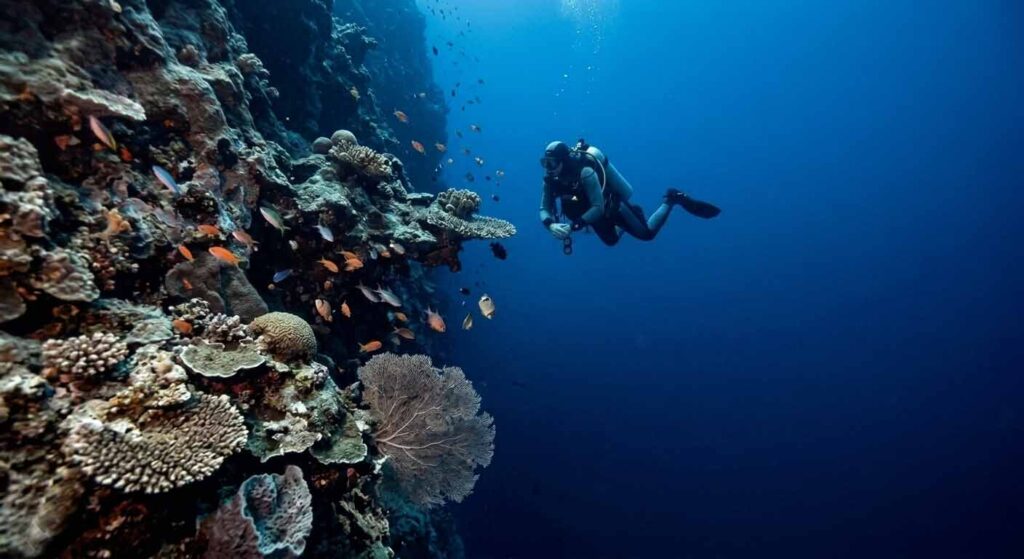
Bolihon Point provides a livelier contrast, particularly when tidal movement accelerates water around the site. The prospect of high-energy current diving will appeal to experienced divers, but conditions require a careful briefing, reliable buoyancy, streamlined equipment, and disciplined buddy positioning.
Together, the sanctuaries, wall, and current-swept points create a varied itinerary rather than a single-site trip. Adding protected reef dives before or after diving the dramatic balate wall also gives photographers more opportunities to capture turtles, schooling fish, coral textures, and behavior in gentler water.
Planning Your Dive Trip from Butuan to Carmen
Seasons, Lodging, and Road Transfers
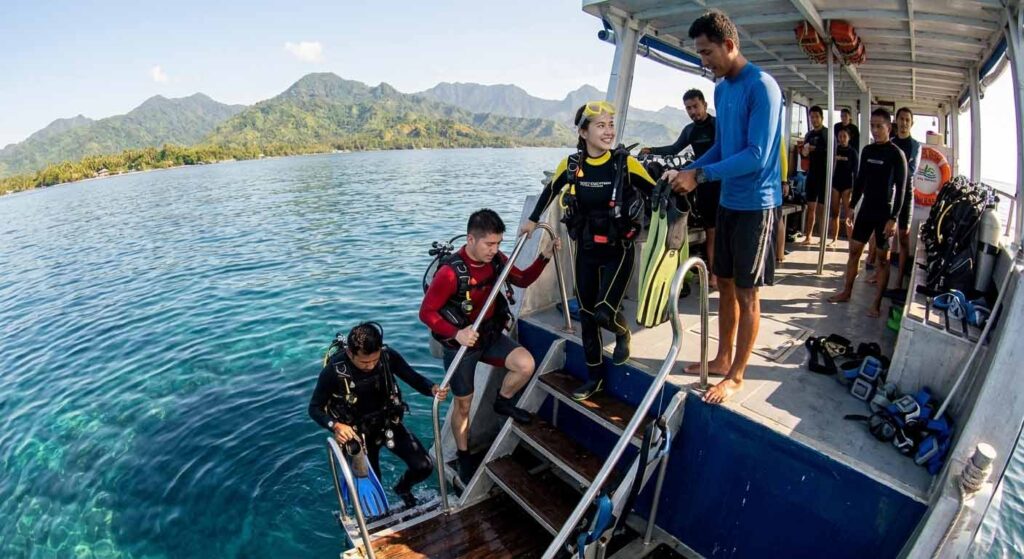
Good preparation makes diving the dramatic balate wall safer and more rewarding, especially because visibility and current strength can change with rain, wind, tides, and runoff. Use reputable seasonality and trip-mapping tools for preliminary planning, then confirm the latest conditions directly with a local dive professional.
Most visitors enter the region through Butuan City, with Bancasi Airport serving as the practical aviation gateway. Accommodation options range from simple coastal stays to properties closer to city services, and this guide to places to stay in Carmen can help match lodging with departure schedules and equipment needs.
Typical conditions are warm, although visibility varies across the year and between offshore walls and sites closer to land. The figures below are planning ranges rather than guarantees, so divers should request a current site report before packing cameras or selecting exposure protection.
| Planning factor | Typical range | Practical note |
|---|---|---|
| Water temperature | 27–30°C | A 3 mm suit is comfortable for many divers |
| Average visibility | 10–25 m | Rain and coastal runoff may reduce clarity |
| Best planning window | Often February–May | Confirm wind, rainfall, and local sea conditions |
| Recommended certification | Open Water or higher | Advanced training is preferable for depth and current |
| Suggested equipment | DSMB, computer, reef-safe light | Bring a current-appropriate camera setup |
From Butuan City, Carmen is reached by road, with journey time depending on traffic, pickup arrangements, and the exact coastal departure point. Schedule transfers with enough margin for check-in, equipment setup, dive briefings, and a conservative surface interval before any return flight.
Supporting Carmen’s Reefs and Coastal Communities
Responsible Diving with a Local Impact
Eco-conscious dive travel can direct income toward local guides, boat crews, homestays, food businesses, transport providers, and equipment staff. Choosing locally operated services helps ensure that the economic value of a healthy reef remains visible within the communities responsible for protecting it.
Divers can reduce their physical impact by maintaining neutral buoyancy, securing gauges and alternate air sources, and never touching coral for stability or photography. Photographers should avoid repeated flash exposure on distressed animals and allow other guests enough space to observe without crowding.
Practical support also includes respecting sanctuary rules, carrying reusable water containers, limiting single-use plastics, and reporting damaged moorings or illegal activity through the appropriate local channel. Visitors should listen to community guides, whose daily observations often reveal changes that occasional travelers would miss.
Ultimately, diving the dramatic balate wall is more than a descent beside an impressive drop-off; it is an invitation to experience Carmen’s reefs with patience, skill, and respect. Travelers who choose responsible operators and support coastal livelihoods help keep Butuan Bay healthy, rewarding, and uncrowded for the divers who follow.