
The Ultimate Guide to Boat Diving in the Philippines: Outriggers, Drop-offs, and Deep Blues
A Filipino bangka glides across water as clear as polished glass. Beneath it, coral reefs glow in the tropical sunlight. Dramatic walls plunge into deep blue water only minutes from shore. For divers, this traditional outrigger boat opens the door to extraordinary adventure.
Sailing by Bangka to Reefs, Walls, and Wrecks
The Philippines contains more than 7,600 islands. Many exceptional dive sites are accessible only by boat. A bangka connects remote beaches, offshore reefs, and hidden channels. Every journey feels like part of the dive.
Morning departures often begin beside a quiet village. Tanks, weights, and food come aboard before sunrise. The crew checks the weather and loads equipment with practiced speed. Soon, the coastline fades behind the outriggers.
Boat access creates more freedom underwater. Divers can follow currents without returning to the same entry point. The captain tracks bubbles and waits near the planned exit. This makes drift diving safer and more enjoyable.
The scenery changes with every region. Limestone cliffs guard Palawan’s reefs and historic wrecks. Volcanic islands rise above coral gardens in the Visayas. Elsewhere, steep walls disappear into mysterious deep blues.
The Bangka Experience: Stable, Spacious, Local
A bangka has narrow outriggers extending from both sides. These provide excellent stability in moderate waves. The long deck offers space for tanks and dive equipment. Larger boats may include shaded seating and a simple toilet.
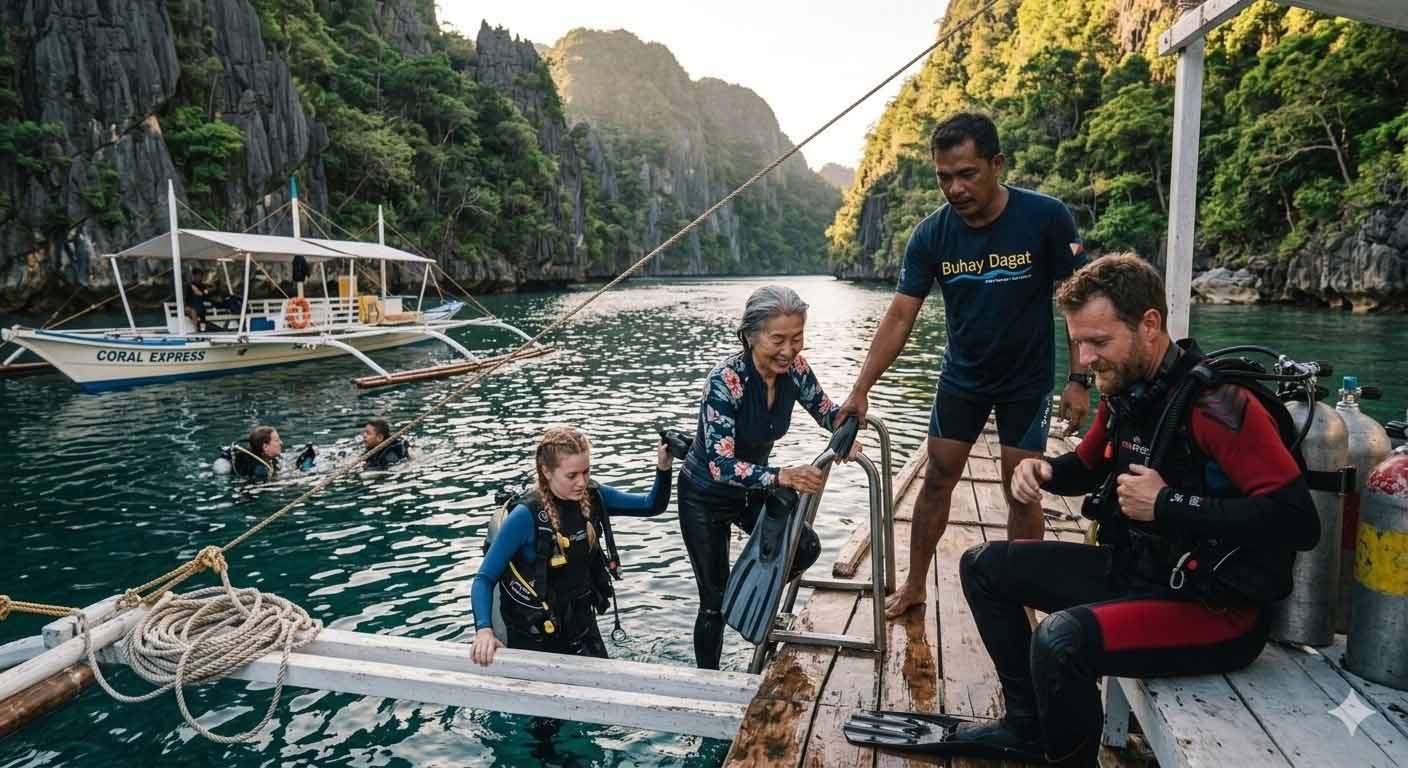
Most dives begin with a classic back-roll entry. Divers sit along the boat’s edge with masks secured. On the divemaster’s signal, they roll backward into the sea. Some larger bangkas use side ladders or low platforms instead.
Exits are usually made using a sturdy ladder. Remove fins before climbing unless the crew says otherwise. Hand up cameras and heavy accessories first. Keep your regulator in place while waves move around the boat.
Local hospitality gives each trip special character. Crews help with tanks, meals, mooring lines, and surface support. They understand currents, weather, and nearby fishing grounds. Their knowledge reflects buhay dagat, or life connected closely to the sea.
From Coral Gardens to Dramatic Deep Drop-Offs
Philippine boat diving reveals remarkable underwater variety. Shallow coral gardens support turtles, reef fish, and colorful nudibranchs. Sunlight makes hard corals shine across the seabed. These sites suit beginners, photographers, and relaxed second dives.
Vertical walls offer a different experience. Divers descend beside fans, sponges, and overhangs. Schools of jacks may gather in the current. Look into the blue for tuna, eagle rays, and sharks.
Deep drop-offs demand stronger buoyancy and depth awareness. Balete Wall in Butuan Bay is a notable example. Near Vinapor, the reef edge falls sharply into darker water. Its remote location adds excitement and a genuine exploratory feeling.
Wrecks create another kind of underwater landscape. Their decks, holds, and passageways attract marine life. Penetration requires proper training and specialized equipment. Recreational divers can still enjoy many wrecks safely from outside.
Three Dive Destinations, Boat Tips, and Safaris
El Nido and Coron, Palawan, combine spectacular scenery with memorable diving. El Nido features limestone cliffs, channels, and colorful reefs. Coron is famous for Japanese shipwrecks from the Second World War. Choose an experienced operator for wreck routes and changing conditions.
Apo Island and Dauin offer two contrasting dive styles. Apo Island has healthy reefs, walls, turtles, and strong fish life. Dauin is celebrated for muck diving over dark volcanic sand. Frogfish, seahorses, and unusual octopuses reward patient observers.
Balete Wall and Vinapor, Agusan del Norte, suit adventurous travelers. Crowds are uncommon, and the underwater terrain feels wild. Expect wall diving, deep water, and fewer tourism facilities. Confirm boat availability, emergency plans, and current conditions before traveling.
On deck, keep masks and computers inside a personal crate. Secure fins and cameras before the boat moves. Listen carefully to briefings about currents, depth, and pickup signals. Finally, tip the crew directly or through the dive shop when service is good.
The Philippines rewards divers who travel beyond the nearest shoreline. A local dive safari brings reefs, wrecks, walls, and island culture together. Book with a responsible operator, respect the crew, and protect every site. Then climb aboard a bangka and follow the deep blue horizon.