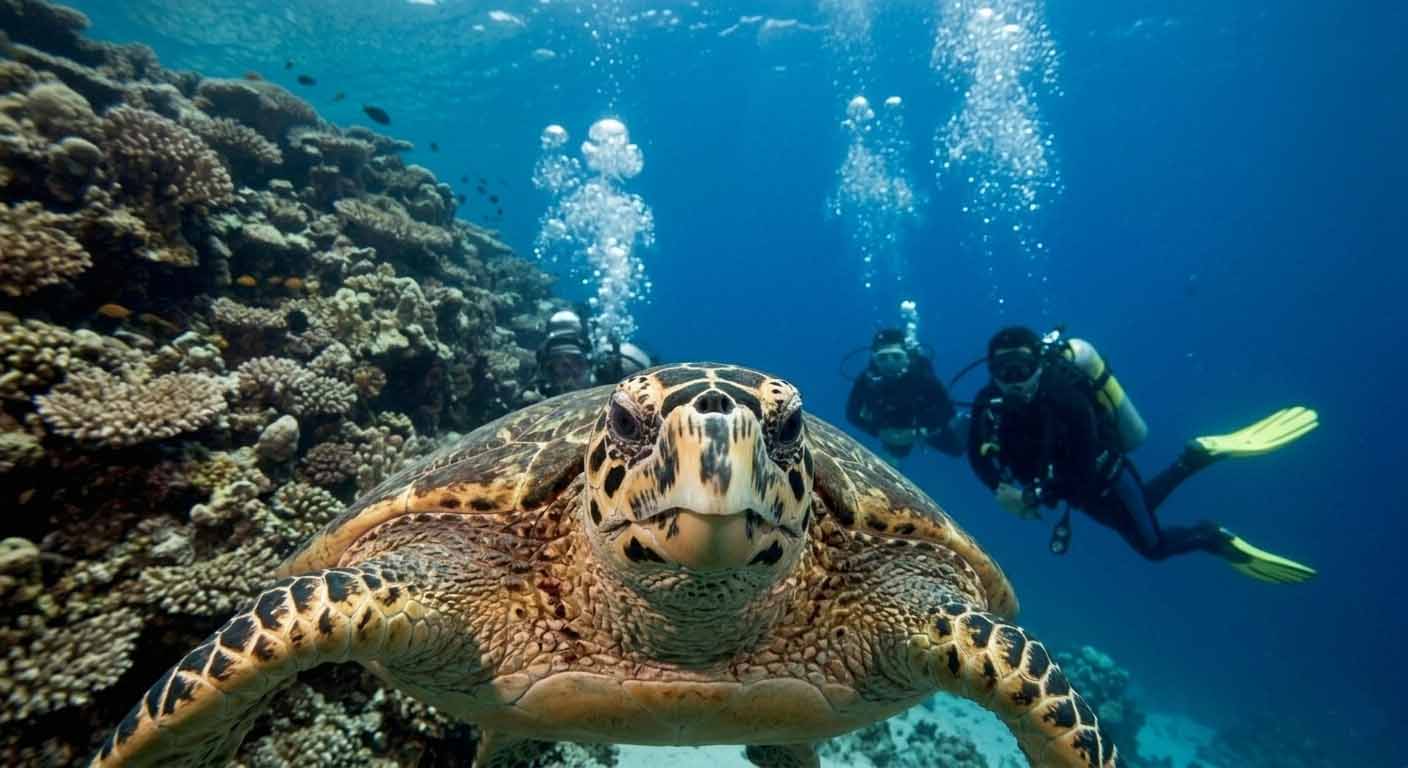
The first time I watched a Hawksbill sea turtle glide over a reef in Butuan Bay, everything else seemed to disappear. Known locally as pawikan, this critically endangered turtle moved with quiet grace, using its narrow, hawk-like beak to search the coral for food. Seeing one in the wild is a bucket-list experience—and a reminder of how much the ocean still needs our protection.
Around Carmen, Agusan del Norte, these encounters unfold far from the crowds of heavily commercialized Philippine dive destinations. Healthy reefs, protected coastlines, and committed local communities have created a hidden sanctuary. With Butuan Bay Scuba and an experienced local divemaster, divers can enter this remarkable habitat responsibly.
Meeting Butuan Bay’s Hawksbill Sea Turtles
A Rare Encounter on an Uncrowded Reef
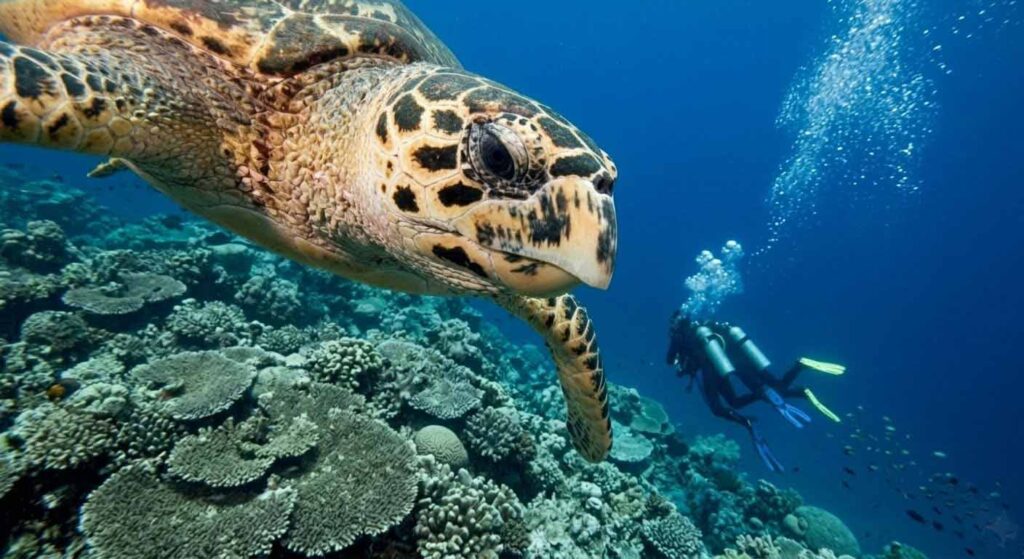
Hawksbill turtles are instantly recognizable by their patterned shells and pointed beaks. They commonly forage around coral reefs, where they feed on sponges and other small marine organisms. Their feeding behavior helps maintain space on the reef, allowing corals and other species to flourish.
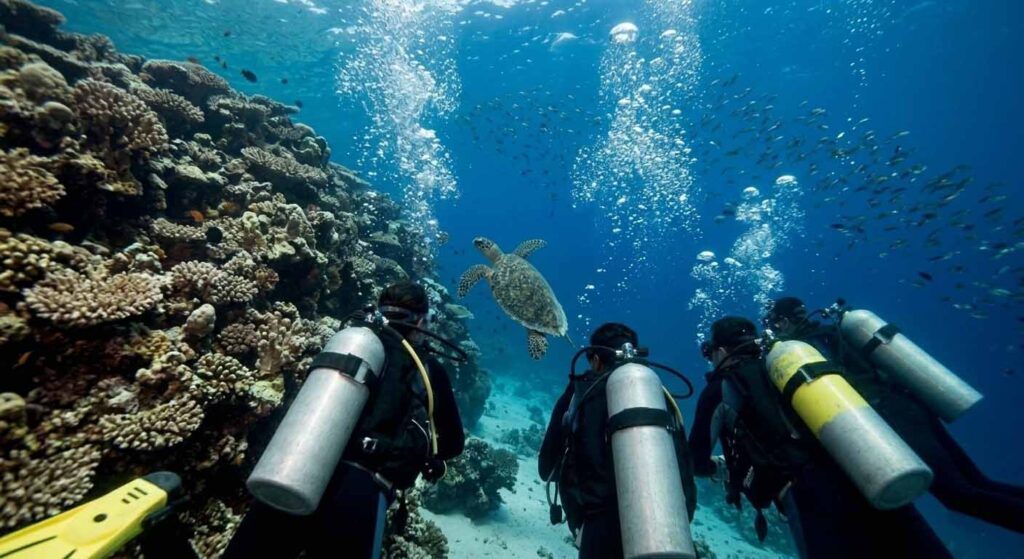
During my dives in Carmen, I have seen Hawksbills resting beneath coral ledges and swimming slowly above reef shelves. The experience feels intimate because the sites are rarely congested. Instead of competing with several dive groups, we often observe a turtle in calm water with only our local guide nearby.
That lack of pressure matters. In crowded destinations, turtles may be surrounded, followed, or blocked by divers looking for photographs. Butuan Bay offers a quieter alternative, as explored in this guide to scuba diving in Carmen, Agusan del Norte.
Local knowledge makes the encounter even more meaningful. The team’s connection to Carmen shapes every dive, from choosing suitable conditions to interpreting turtle behavior. Divers can learn more about the people behind these experiences on the Butuan Bay Scuba story page.
Carmen’s Protected Haven for Marine Turtles
A 5,756-Hectare Critical Habitat
The ecological importance of Carmen extends well beyond individual dive sites. The DENR-designated Carmen Critical Habitat for Marine Turtles covers approximately 5,756 hectares, protecting an interconnected coastal environment used by marine turtles for feeding, resting, movement, and nesting.
Barangay Vinapor is especially important because of its nesting beaches. Protecting sand, nearshore water, seagrass, and coral habitat as one connected system gives turtles a better chance of completing their life cycle. A nesting beach cannot remain productive if the surrounding feeding grounds are degraded.
Strong national protections, local coastal ordinances, and sanctuary rules help reduce destructive activity in sensitive areas. Community participation is equally important. Fishers, local officials, sanctuary personnel, and dive professionals all have a role in reporting threats and keeping protected zones healthy.
Below the surface, the benefits are visible in places such as Cahayagan Marine Sanctuary. Coral structures provide shelter, while nearby seagrass and productive shallows support a wider food web. Conservation stories and regional updates are also shared through the Butuan Bay diving blog.
Top Turtle Dives at Tagcatong and Cahayagan
Coral Shelves, Seagrass, and Resting Ledges
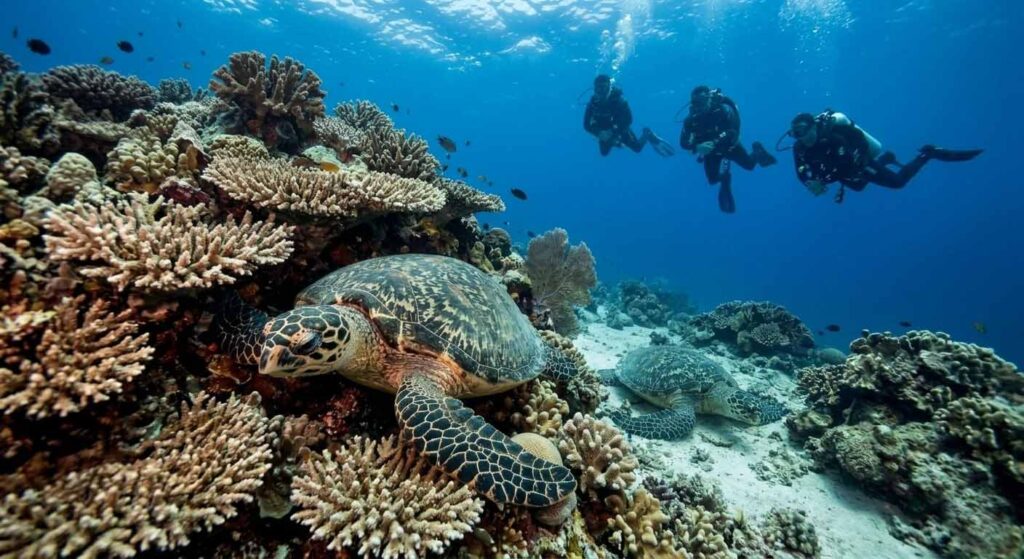
Tagcatong Marine Sanctuary is one of my favorite places to look for Hawksbills. Its coral shelves create feeding corridors and shaded ledges where turtles may settle between trips to the surface. The reef’s structure encourages slow exploration rather than a rushed descent.
A local divemaster knows where turtles have previously rested, but no wildlife sighting is guaranteed. We approach the Tagcatong Marine Sanctuary dive site with patience, checking overhangs without entering restricted spaces or disturbing the reef. This account of diving Tagcatong with sea turtles captures the site’s quiet appeal.
Cahayagan offers a different but complementary environment. Its coral patches, nursery areas, and nearby seagrass beds support juvenile fish and larger roaming animals. Hawksbills can forage around the reef before resting beneath protected coral formations. The sanctuary’s ecological role is described in this feature on Cahayagan as a living marine nursery.
Together, Tagcatong and Cahayagan show why habitat diversity matters. Compared with over-commercialized locations, Carmen offers lower diver pressure and a stronger sense of ecological continuity. The contrast is also considered in this comparison of Mindanao and Mindoro scuba diving.
How Local Divemasters Protect Every Encounter
Letting the Turtle Set the Pace
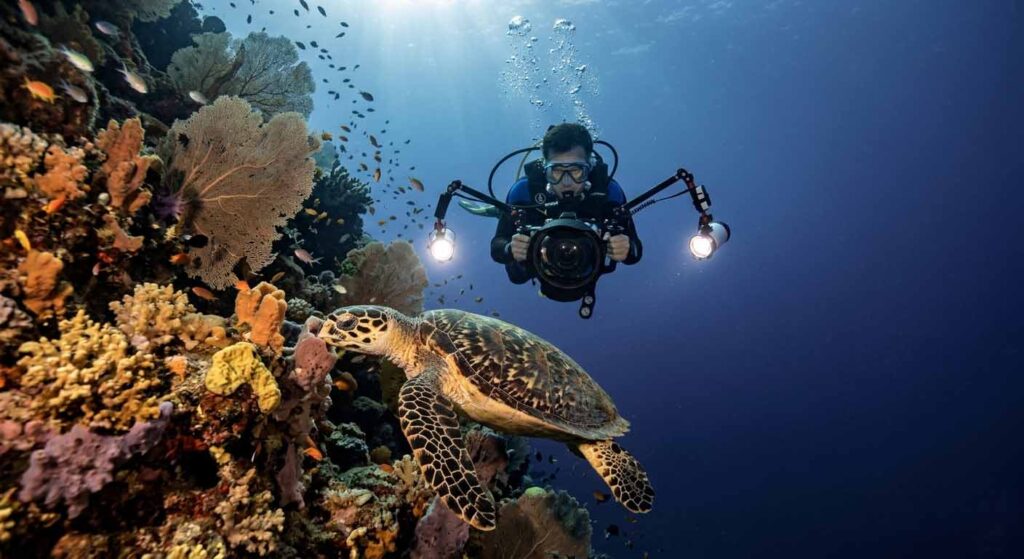
Before entering the water, our divemaster explains the rules: remain streamlined, control buoyancy, keep a respectful distance, and never touch or chase a turtle. If a Hawksbill changes direction repeatedly, speeds away, or stops feeding, we give it more space.
Resting behavior requires particular care. Hawksbills may wedge themselves beneath ledges or remain motionless on the reef. We avoid shining lights directly into their eyes, crowding an overhang, or blocking their route to the surface. The turtle must always control the encounter.
Good buoyancy protects more than the animal. Dangling gauges, careless fins, and uncontrolled descents can damage coral that took decades to grow. A skilled guide positions the group over safe areas and adjusts the dive plan when currents, visibility, or wildlife behavior make an approach inappropriate.
This is where local experience becomes invaluable. Guides understand seasonal conditions, boat routes, sanctuary boundaries, and the character of individual reefs. Visitors planning a wider trip can consult the complete guide to Mindanao scuba locations while keeping conservation at the center of every itinerary.
Plan a Responsible Hawksbill Dive in Butuan Bay
Prepare Well and Leave Only Bubbles
Responsible turtle diving starts before departure. Choose reef-safe personal habits, secure all equipment, practice buoyancy, and bring only photography gear you can manage comfortably. The Philippines boat-diving trip checklist is a useful starting point for organizing equipment without overpacking.
Allow enough time in Carmen to accommodate weather and changing sea conditions. Staying locally also reduces rushed schedules and supports community businesses. This guide to lodging in Carmen for scuba divers can help visitors plan a practical base near the bay.
When booking, share your certification level, recent dive experience, equipment needs, and interest in turtle-friendly photography. Use the Butuan Bay Scuba contact page to discuss guided trips, suitable sites, and current conditions. A thoughtful plan creates a safer, less intrusive experience.
Butuan Bay is special not because Hawksbill turtles are treated as attractions, but because they are respected as part of a living coastal ecosystem. Carmen’s critical habitat, Vinapor’s nesting beaches, protected sanctuaries, and knowledgeable local divemasters make this one of the Philippines’ most rewarding places to seek a Hawksbill encounter. Book a guided dive, follow the turtle’s pace, and let your visit help demonstrate that responsible tourism can support the reefs it celebrates.