

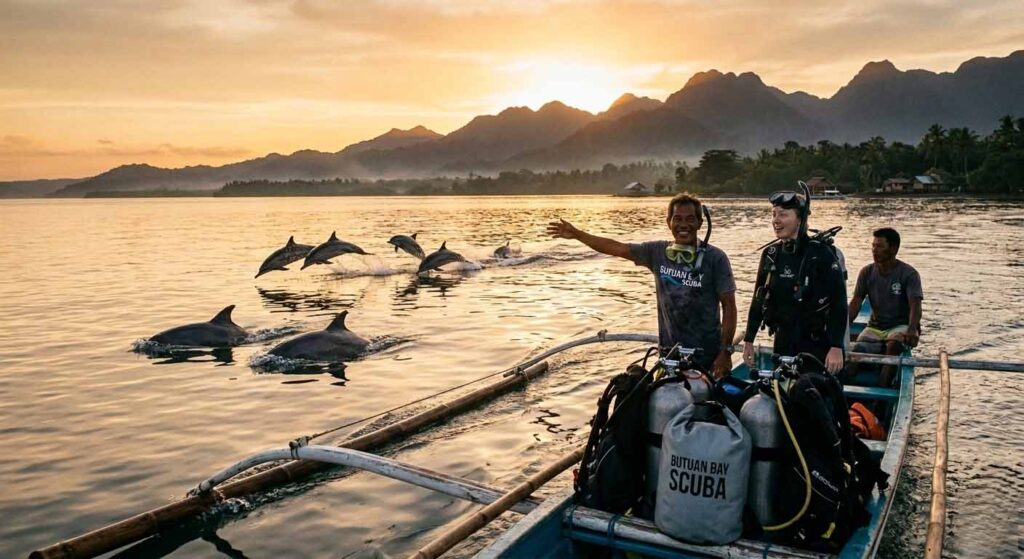
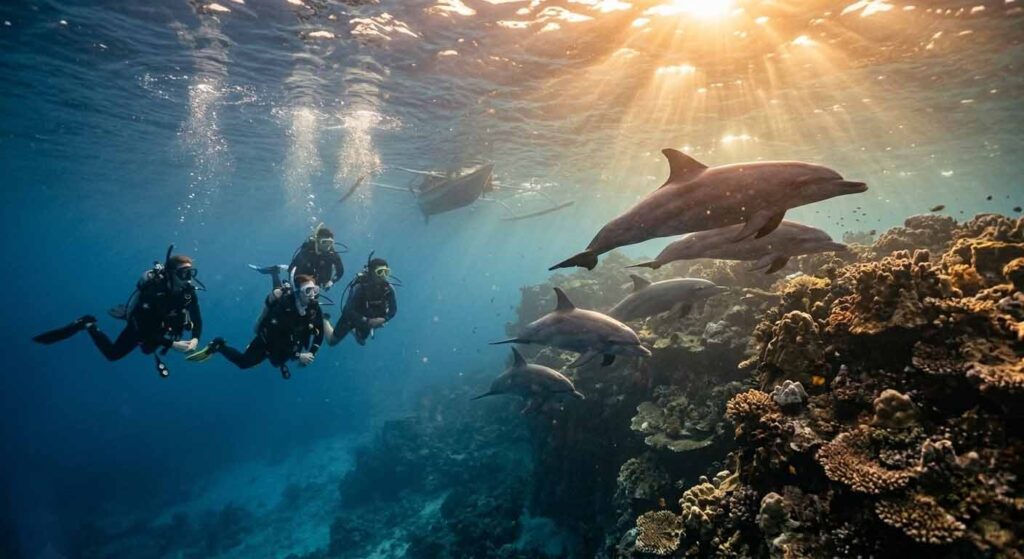
The sun had barely cleared the mountains of Agusan del Norte when our bangka slipped away from Carmen. Its bamboo outriggers skimmed glassy water while the engine hummed toward the open bay. Then the surface erupted: a pod of dolphins arced through the golden light, with smaller spinners twisting above the wake and heavier bottlenose dolphins surfacing nearby. Before we had even assembled our scuba gear, Butuan Bay had delivered its first unforgettable encounter. Dolphin Watching and Diving in Butuan Bay.
Dawn Dolphins Along the Agusan del Norte Coast
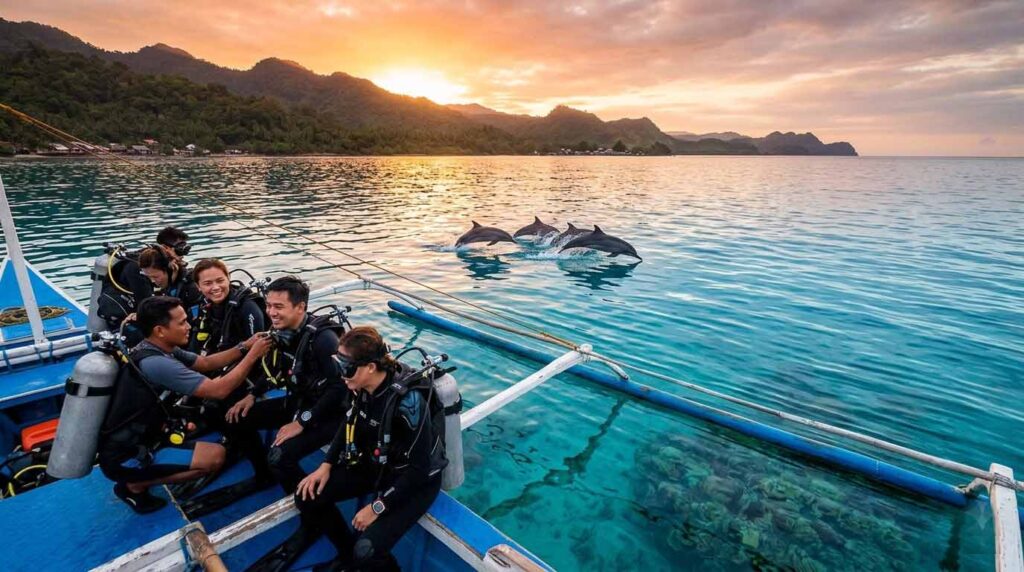
A Wildlife Encounter Before Breakfast
Dawn is the best time to appreciate the scale and beauty of Butuan Bay. Morning winds are often lighter, visibility across the surface is better, and the low sun turns every splash into silver. From a traditional bangka, even a distant dorsal fin is easy to spot against the calm water.
Our Carmen-based divemaster watched the horizon while the boat crew followed subtle clues: circling seabirds, patches of disturbed water, and sudden bursts of baitfish. Anyone arranging scuba diving in Butuan Bay with a local divemaster benefits from this practical knowledge. Local guides understand both the reefs and the routes marine animals commonly travel.
When dolphins appeared, the crew slowed down and maintained a respectful distance. We did not chase, surround, feed, or attempt to swim with them. Instead, we let the pod choose whether to approach. Several animals briefly rode beside the bow before turning back toward deeper water.
Spinner and bottlenose dolphins may be encountered in the wider bay, although sightings can never be guaranteed. Weather, prey movement, season, and boat traffic all influence their location. That unpredictability is part of the adventure: every quiet scan of the horizon carries the possibility of a sudden leap. Dolphin Watching and Diving in Butuan Bay.
Why Dolphins and Healthy Reefs Share Butuan Bay
Deep Water Meets Productive Coastal Habitat
Butuan Bay is more than a broad coastal inlet. Its underwater terrain transitions from shallow reefs and coastal shelves to steep slopes, channels, and deeper offshore water. Dolphins can hunt along these depth changes while remaining surprisingly close to coral ecosystems used by reef fish, turtles, and invertebrates.
Currents transport nutrients through the bay and help support plankton, baitfish, squid, and larger predators. When prey gathers along drop-offs or current lines, dolphins gain productive feeding grounds. Those same moving waters can refresh reefs, distribute larvae, and carry food to corals and filter-feeding organisms. Dolphin Watching and Diving in Butuan Bay.
The connection becomes obvious at sites such as the living nursery of Cahayagan Marine Sanctuary. Juvenile fish shelter in protected reef habitat before spreading into surrounding waters. Healthy nursery areas strengthen the food web that eventually supports larger hunters farther offshore.
Conservation therefore matters above and below the surface. The Philippine Information Agency’s marine conservation coverage provides useful context on local initiatives and turtle-related developments, while the Inquirer Regions archive on environmental declarations helps place critical-habitat protection in a wider national story. Butuan Bay’s dolphins, reefs, and haven for hawksbill turtles are interconnected parts of one marine landscape.
From Dolphin Encounters to Deep-Water Descents
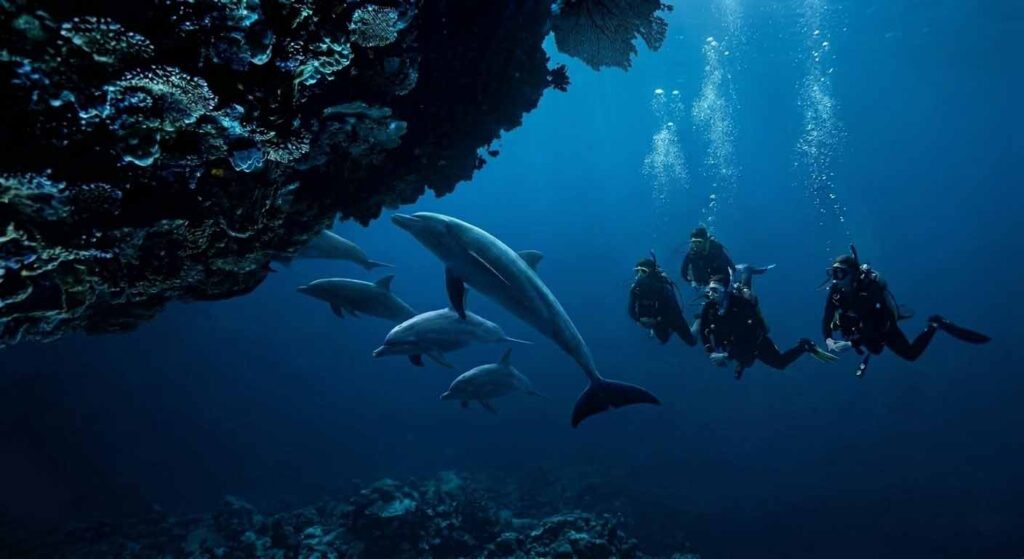
Trading Binoculars for Masks and Regulators
After the dolphins moved away, the mood aboard the bangka shifted from excited observation to focused preparation. Tanks were secured, regulators checked, and buoyancy compensators tightened. My buddy and I reviewed our signals, maximum depth, expected current, entry procedure, and the plan for staying close to the divemaster.
The transition felt wonderfully surreal. Minutes earlier, we had been watching dolphins breathe at the surface; now we were preparing to enter their blue world. Sitting on the gunwale with my mask in place, I completed a final buddy check and waited for the divemaster’s signal.
A backward roll replaced the engine noise with bubbles. Below us, sunlight formed moving shafts over the reef before fading beside the drop-off. The divemaster led from the front, checking our comfort and depth while choosing a route protected from the strongest flow.
Current awareness is essential around exposed points and walls. Divers considering Bolihon Point’s high-octane currents should have appropriate experience and follow local guidance. On a suitable day, diving Bolihon Point offers an exhilarating combination of moving water, schooling fish, and deep-blue scenery. Dolphin Watching and Diving in Butuan Bay.
Carmen’s Marine Sanctuaries, Walls, and Turtles
Following the Coast Toward Protected Reefs
Dolphin-search routes can lead past several of Carmen’s most compelling underwater areas. One highlight is Cahayagan Marine Sanctuary, where protected coral habitat supports clouds of reef fish. Descending there feels like entering a busy underwater neighborhood filled with damselfish, wrasses, butterflyfish, and watchful groupers.
For more dramatic topography, the reefs and caves of Punta Diwata add ledges, darker recesses, and striking changes in relief. Nearby walls fall toward increasingly blue water, producing the sensation of flying. Divers should maintain careful buoyancy and avoid entering overhead spaces without the proper training. See our related post of Punta Diwata.
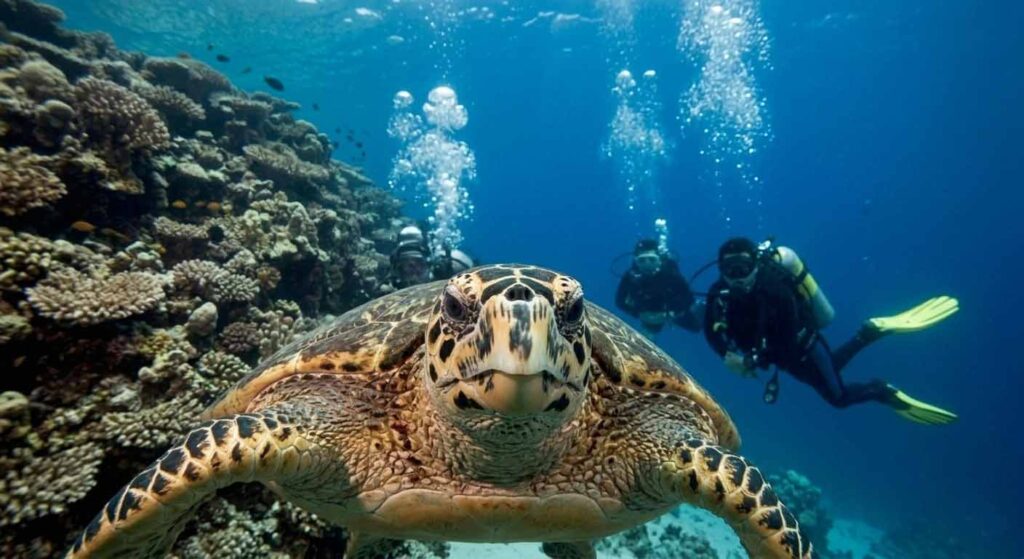
Another rewarding option is Tagcatong Marine Sanctuary. Its protected reef areas offer opportunities to see turtles resting, feeding, or rising for air. The experience described in swimming with sea turtles at Tagcatong is most meaningful when divers keep their distance and never block a turtle’s route to the surface.
Turtles are reptiles that must surface to breathe, as explained in the Encyclopedia Britannica sea turtle overview. Regional stewardship also includes coastal cleanups and hatchling releases documented through Philippine News Agency environmental reports. These efforts reinforce an important lesson: spectacular wildlife encounters depend on clean coasts, protected habitat, and responsible behavior. Dolphin Watching and Diving in Butuan Bay.
Plan Your Dawn Dolphin-Watching Dive Adventure
Timing, Equipment, and Responsible Expectations
Plan to leave Carmen early enough to be on the water around sunrise. Confirm the meeting time, travel arrangements, tank requirements, and rental equipment the previous day. If possible, prepare your exposure suit, mask, fins, dive computer, certification card, and surface protection before going to bed.
Bring drinking water, reef-conscious sun protection, a hat, a light windbreaker, and a dry bag. Seasickness medication may help susceptible passengers, but it should be tested beforehand and used according to professional medical advice. An underwater camera is optional; good buoyancy and situational awareness are far more important.
Tell the operator your certification level, recent dive history, maximum comfortable depth, and experience in current. Conditions can change rapidly, so the final site should be selected by the divemaster and boat crew. Less experienced divers can still enjoy sheltered reefs, while trained divers may be offered deeper walls or faster-moving sites.
Most importantly, treat dolphin watching as a possible bonus rather than a guaranteed performance. Choose an operator that avoids aggressive approaches, follows safe boating practices, and prioritizes animal welfare. Even without a sighting, a dawn crossing followed by coral gardens, turtles, walls, and open blue water remains an exceptional day.
Set your alarm, pack your dive gear, and meet the Carmen crew before first light. A morning in Butuan Bay can begin with dolphins cutting across a sunrise sea and continue with a descent beside reefs, sanctuaries, turtles, and dramatic walls. Book an early boat-diving excursion with Butuan Bay Scuba, bring a flexible sense of adventure, and let the bay reveal what is moving through its deep blue.