
Meta Description
Explore Dive Sites in Butuan Bay, from Balete Wall’s coral drop-offs to Punta Diwata’s caves, with local wildlife and trip-planning tips.
Balete Wall to Punta Diwata: The Best Dive Sites in Butuan Bay
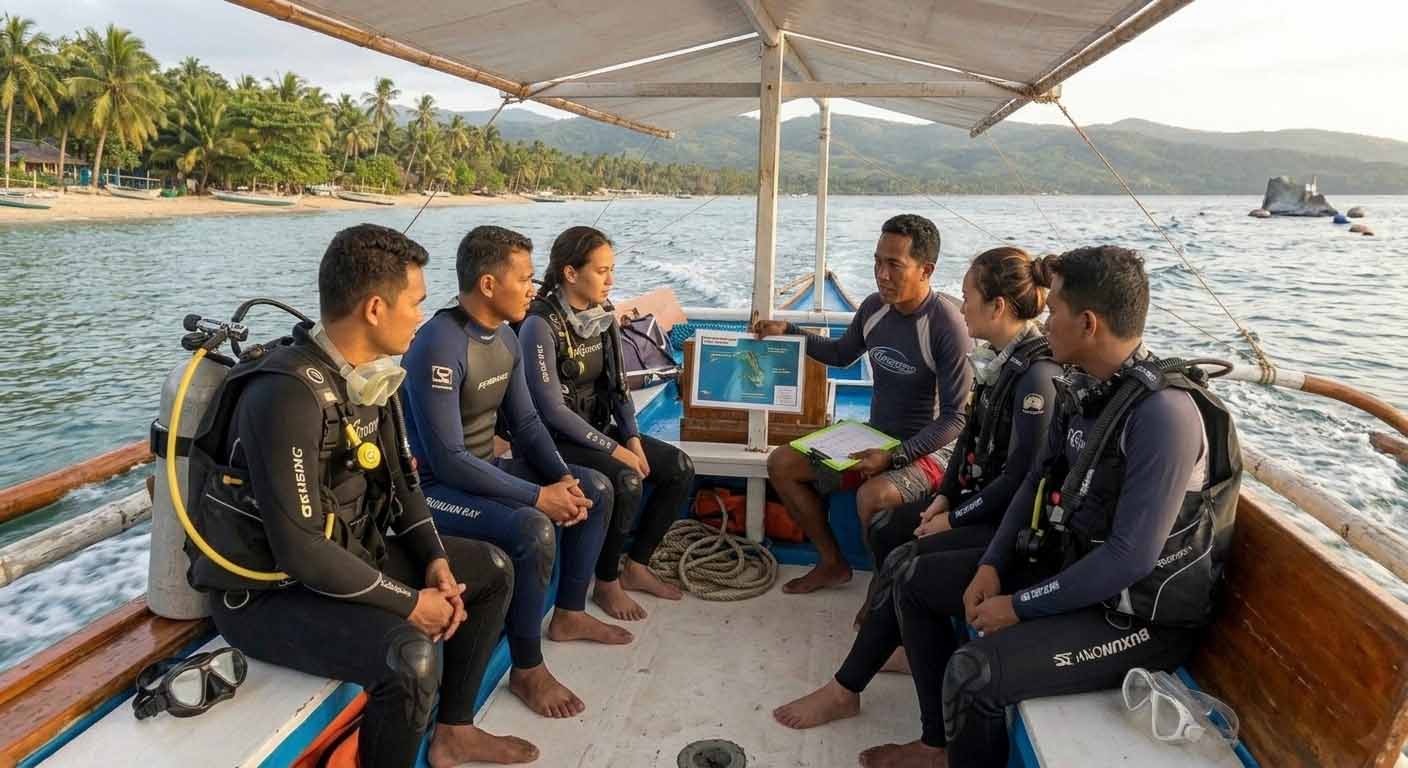
The Dive Sites in Butuan Bay reveal a side of Mindanao that many travelers never expect. Coral walls plunge into blue water, turtles cruise over reefs, and limestone caves frame the coastline. Moreover, Carmen offers uncrowded diving with a distinctly local character. This guide explores Balete Wall, Punta Diwata, marine sanctuaries, and lesser-known reefs. It also covers conditions, safety, wildlife, and practical planning. Start with Butuan Bay Scuba to discover guided experiences shaped by local knowledge and responsible diving.
Why Dive Sites in Butuan Bay Feel So Magical
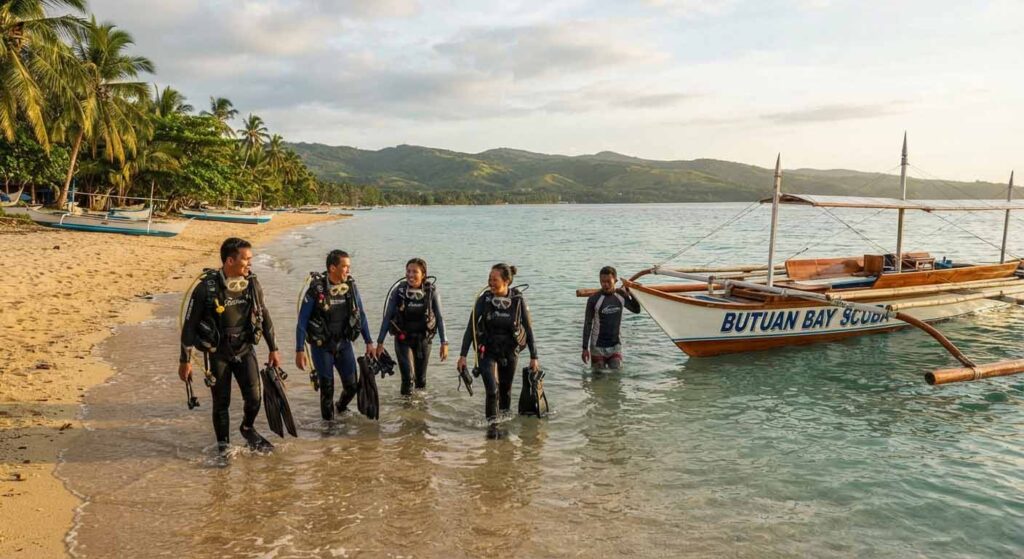
Butuan Bay curves along the northern coast of Agusan del Norte. Here, rivers, rocky points, and offshore reefs create varied underwater terrain. The geographic profile of Carmen places Vinapor, Tagcatong, and Poblacion along this productive coastline. Meanwhile, local dive profiles range from about 40 feet to well beyond 100 feet. Therefore, divers can explore shallow gardens, slopes, walls, and deeper formations during one trip.
The bay’s appeal comes from contrast. One site may feature a gentle coral shelf suitable for relaxed observation. However, the next location can drop sharply into deep blue water. Sunlight highlights hard corals near the surface, while large sponges dominate deeper ledges. In addition, changing bottom contours create natural shelter for reef fish, crustaceans, and shy macro subjects.
These Dive Sites in Butuan Bay also feel personal because boat traffic remains relatively light. Divers often descend without meeting another group underwater. Consequently, fish behave naturally, and photographers gain more time around delicate subjects. Review the complete Butuan Bay dive overview before choosing locations. A local divemaster can then match the day’s route with tides, visibility, and experience levels.
Marine conservation adds another layer of magic. Communities depend on healthy coastal waters, so responsible operators promote careful buoyancy and low-impact encounters. Never touch corals, chase turtles, or collect shells. Instead, hover calmly and let wildlife approach on its own terms. This simple discipline protects the reef and often produces better encounters. [IMAGE PLACEHOLDER: Alt Text: Healthy coral gardens at the Dive Sites in Butuan Bay]
Diving Balete Wall’s Dramatic Coral Drop-Offs
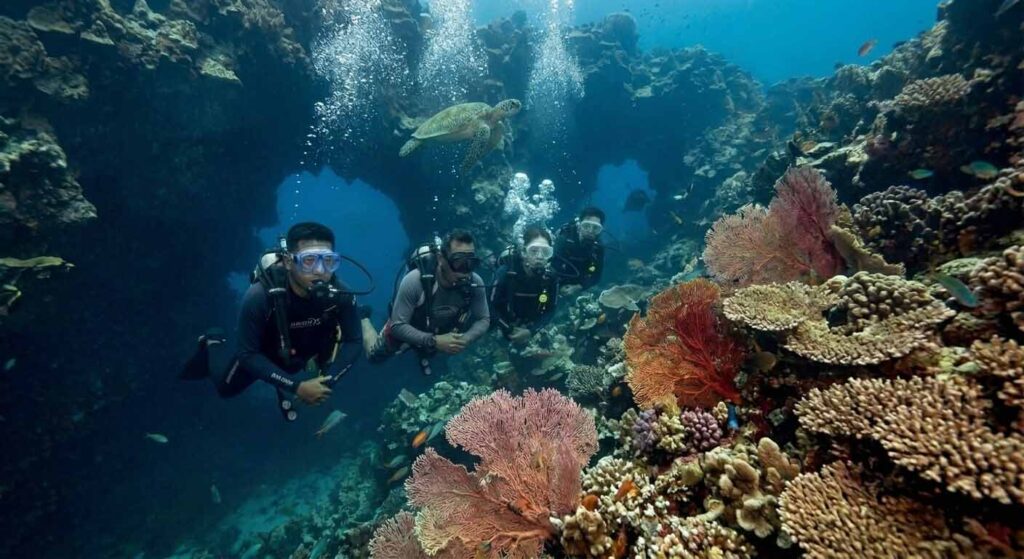
Balete Wall delivers the dramatic descent that experienced divers crave. Its reef edge falls from a bright coral platform toward darker water below. As you descend, the wall reveals ledges, crevices, sea fans, and sponge-covered outcrops. Moreover, the open-water view can feel immense when visibility improves. The detailed Balete Wall dive guide explains why this site deserves careful planning.
Depth gives Balete Wall much of its character. Divers can remain near the upper section or follow the contour deeper. However, recreational limits, gas supply, and no-decompression time must guide every profile. Currents may also strengthen near exposed corners. Therefore, teams should descend together, watch reference points, and maintain close contact with their guide throughout the dive.
Carmen’s reefs feature oversized sponge formations that locals sometimes call “Spongebobs.” These structures create bold shapes against the wall and provide habitat for small reef creatures. Furthermore, reports from Expat Philippines highlight Carmen’s lush reef life and memorable massive sponges. Look closely around their bases for gobies, shrimp, nudibranchs, and tiny crabs. Still, avoid resting fins or cameras on living surfaces.
Schools of fusiliers may pass beyond the wall, while butterflyfish and wrasses work closer to the reef. Turtles also appear when conditions align. Because the blue-water side creates task loading, new wall divers should stay above their maximum depth. The experience-level guide for diving near Butuan City can help guests choose an appropriate itinerary.
Exploring Punta Diwata’s Caves and Reefs
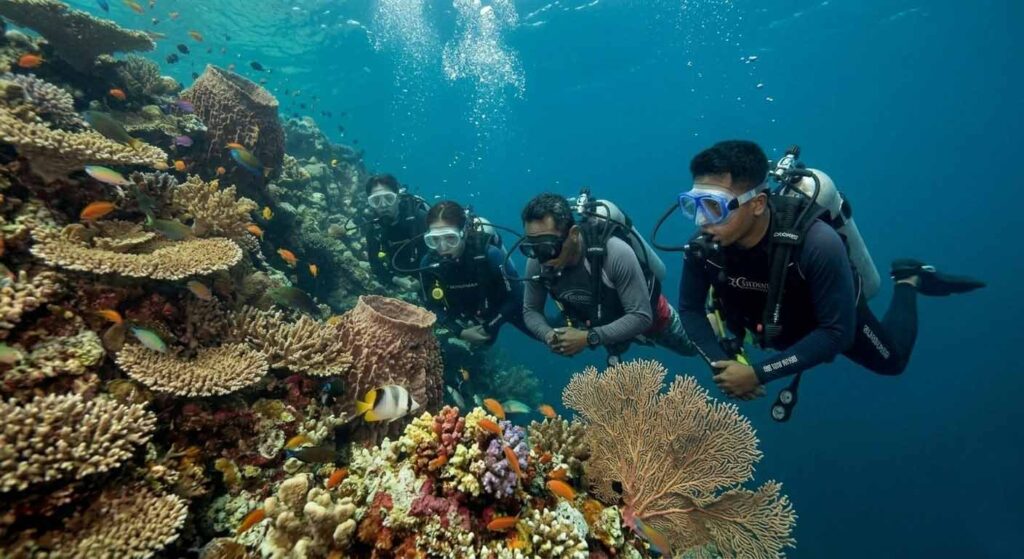
Punta Diwata combines rugged coastal scenery with reefs shaped by rock, sand, and coral growth. Limestone features create overhangs, channels, and shadowed entrances. As a result, every turn offers a different composition for wide-angle photography. Sunlight can stream across the shallows, while deeper recesses reveal softer colors. The Punta Diwata reefs and caves guide provides a closer look at this distinctive area.
Visibility changes with rainfall, tides, wind, and runoff. However, clear days can reveal broad reef views and striking contrasts around rocky formations. Divers should avoid entering any enclosed cave without proper training, equipment, and a qualified guide. Instead, recreational groups can explore approved open areas and cavern-like edges. Safety always matters more than capturing a dramatic image.
Macro photographers should inspect shaded surfaces without touching them. Nudibranchs, small blennies, shrimp, and juvenile fish often use cracks for protection. Meanwhile, sandy patches may hold bottom-dwelling creatures that disappear beneath the substrate. Move slowly and control each fin kick. Consequently, sediment stays settled, visibility remains clear, and other divers can enjoy the same scene.
Punta Diwata rewards flexible planning. A guide may adjust the entry point when waves affect one side of the headland. In addition, tide timing can improve comfort around exposed rocks. Carry a surface marker buoy and follow the agreed route. For broader coastal travel advice and recognized safety practices, consult the PADI Destination Guide before visiting Agusan del Norte.
Hidden Dive Sites in Butuan Bay and Marine Life
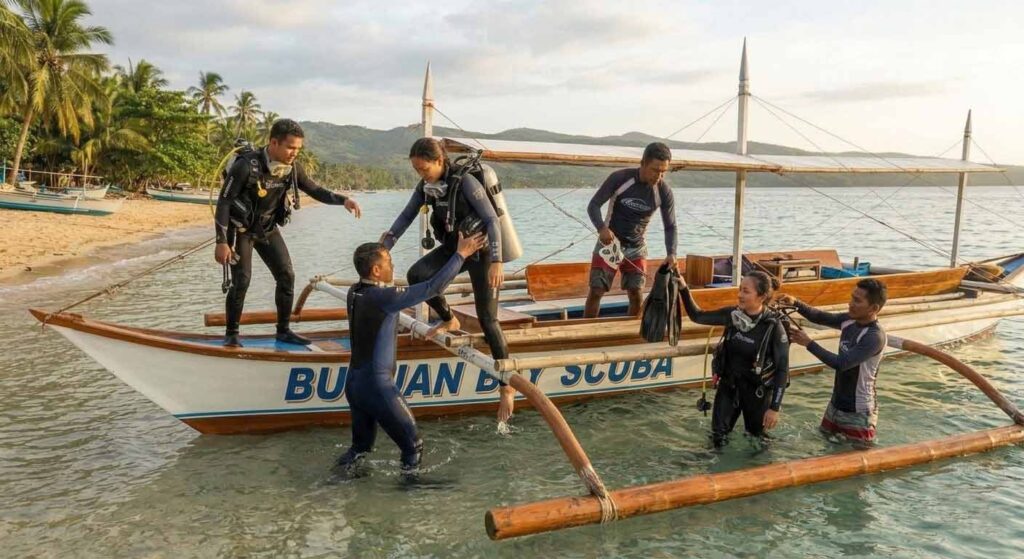
Beyond the best-known landmarks, smaller reefs and community-managed waters add variety. Some sites feature gentle coral slopes, while others hold patch reefs separated by sand. Therefore, they can suit training dives, macro searches, or slow photography sessions. Exact locations may depend on weather and local access. Diving with a local Butuan Bay divemaster helps visitors find suitable sites without disturbing sensitive habitats.
Hawksbill turtles rank among the bay’s most valued residents. They often forage around coral structures and sponge-rich sections. However, divers must give them room to surface and breathe. Approach from the side, maintain neutral buoyancy, and never block their path. Learn more about Butuan Bay’s hawksbill turtle habitat before your trip.
Reef fish provide constant movement across these hidden sites. Damselfish defend small coral territories, while parrotfish graze along the reef. In addition, moray eels may watch from crevices, and lionfish hover near shaded ledges. Patient divers can also spot pipefish, flatworms, and camouflaged scorpionfish. A slow pace usually reveals more wildlife than a long-distance swim.
Butuan Bay also holds an unusual place in regional megamouth shark history. Rare megamouth encounters and records have drawn scientific interest to Philippine waters, including the wider bay region. Nevertheless, divers should never expect to see this deep-water shark on a normal reef dive. Its story instead highlights the bay’s connection with deeper marine ecosystems. [IMAGE PLACEHOLDER: Alt Text: Hawksbill turtle at protected Dive Sites in Butuan Bay]
Planning Your Dive Trip to Carmen, Agusan del Norte
Most visitors reach Carmen by road from Butuan City. Travel times can change with traffic, weather, and pickup arrangements. Therefore, confirm your meeting place with the dive center in advance. Boats usually depart according to tides and sea conditions rather than a fixed tourist timetable. Arriving early also leaves enough time for paperwork, equipment checks, and a detailed site briefing.
Calmer diving windows often occur during fair-weather periods, particularly from March through May. However, Butuan Bay can receive rain throughout the year. Wind direction and recent rainfall may affect visibility more than the calendar. Ask for a current forecast before booking several days of diving. Moreover, leave room in your schedule for alternative reefs when conditions change.
Bring a well-fitting mask, exposure protection, reef-safe sun protection, and a surface marker buoy. A dive computer also helps track changing depths along walls and slopes. Meanwhile, photographers should pack spare seals, batteries, and moisture absorbers. Rinse every item after saltwater use. If you need a nearby base, compare these lodging options in Carmen.
Share your certification level, recent dive history, and equipment needs before arrival. This information allows the team to plan safer sites and suitable depth limits. Furthermore, tell your guide if you feel rusty or uncomfortable with currents. Honest communication improves every dive. Finally, wait at least 18 to 24 hours after repetitive diving before flying, depending on your profiles and training guidance.
From Balete Wall’s immense coral drop-offs to Punta Diwata’s rocky caves, the Dive Sites in Butuan Bay offer genuine variety. More importantly, they deliver quiet reefs, unusual sponge formations, turtles, macro life, and welcoming coastal communities. Careful planning will help you experience these sites safely and responsibly. Respect local rules, maintain excellent buoyancy, and follow your divemaster’s advice. When you are ready to build a personalized itinerary, contact Butuan Bay Scuba and reserve your dives in Carmen.