
Diving Bucket List Philippines: Punta Diwata Cave
A diving bucket list Philippines trip does not need to keep you underwater every day. In Agusan del Norte, a visit to Punta Diwata Cave gives divers a practical surface interval with limestone terrain, coastal scenery, and local character. It also reveals what remote Mindanao travel demands from your equipment. Good planning matters here because shops, spare parts, and emergency services may sit several hours away.
Diving Bucket List Philippines: Punta Diwata Cave
Punta Diwata sits along the Carmen coast, where limestone formations meet Butuan Bay. The surrounding area feels quieter than the country’s major resort hubs. However, visitors should not mistake quiet for easy access. Roads, weather, tides, and local transport can affect the day’s schedule. The official Philippines travel portal provides useful regional information before you arrive.
Although many divers place reefs first on a diving bucket list Philippines itinerary, the cave walk deserves its own morning or afternoon. It offers a dry-land look at the same limestone geology that shapes nearby walls and drop-offs. You can compare the cave visit with the mapped Punta Diwata reefs and caves before building your schedule.
A diving bucket list Philippines surface interval
Treat the site as a local outdoor attraction rather than a managed theme park. Conditions and access arrangements may change, so ask residents or tourism contacts before leaving Carmen. Also, follow current notices from the Agusan del Norte provincial government. Local guidance helps you avoid restricted ground, private property, and unsafe cave sections.
The walk may involve damp rock, mud, loose gravel, and sharp limestone. Therefore, wear closed shoes with strong tread instead of sandals. Bring a headlamp, backup light, gloves, drinking water, and a compact first-aid kit. A helmet also makes sense if your guide expects low ceilings. Keep cameras inside a padded dry bag until you reach a stable place.
Reaching Punta Diwata and Checking Conditions
Most travelers approach Punta Diwata through Butuan City and continue west toward Carmen. Travel time depends on your vehicle, road work, and pickup arrangements. If you plan an early dive the next day, staying near the coast reduces unnecessary driving. Review these lodging options around Carmen before booking your room.
Weather deserves serious attention when planning a diving bucket list Philippines journey in Mindanao. Heavy rain can make trails slippery and reduce visibility near cave entrances. It can also change runoff and water conditions along the coast. So, check the latest PAGASA weather forecasts and ask your local guide what actually happened overnight.
Tides may influence shoreline approaches, boat landings, and exposed rock. However, a general forecast cannot replace local knowledge because narrow coastal features react differently. Use NOAA’s explanation of tides to understand the basic cycle. Then confirm the practical timing with a guide who regularly works around Punta Diwata.
Before leaving, tell your accommodation or dive operator where you plan to go. Carry a charged phone, power bank, cash, and offline maps. Meanwhile, review any regional marine notices from the Philippine Coast Guard, especially if a boat transfer forms part of the route. Pack dive electronics separately from wet footwear and muddy cave equipment.
Exploring the Cave Safely With a Local Guide
A recreational scuba certification does not qualify anyone for cave diving. Punta Diwata’s land-based cave visit should remain separate from technical overhead diving unless a qualified operator states otherwise. The PADI guide to cavern and cave diving explains why direct ascent, line work, gas planning, and specialist training matter in submerged passages.
For the walking route, hire a local guide who knows current entrances, unstable areas, and weather patterns. Agree on the route and turnaround time before entering. In addition, ask how the group will handle an injury or sudden storm. The DAN guidance on emergency planning can help you build a simple contact and evacuation plan.
Inside the cave, keep enough distance between people to avoid knocking loose stones onto the person behind. Move slowly, test uncertain footing, and maintain visual contact with the guide. Also, carry one primary light and one independent backup. A phone flashlight does not count because a fall, wet hand, or low battery can remove your only light source.
Do not touch formations, remove rocks, or leave food packaging behind. Bats and other cave animals also need space, so avoid bright flashes and loud voices near roosting areas. Meanwhile, the conservation principles promoted by PADI AWARE apply on land as well as underwater: control your actions, remove your rubbish, and respect local rules.
Choosing New or Used Gear for Remote Mindanao
Remote travel changes the new-versus-used equipment calculation. A diving bucket list Philippines trip can expose weak inflator hoses, cracked mouthpieces, and poorly serviced regulators at the worst time. New gear offers warranty support and a known history. However, carefully inspected secondhand equipment may offer better value. Read this detailed comparison of buying used scuba gear versus new gear before spending money.
A regulator deserves the strictest buying standard because it supports every breath. Used regulators can work well, but only after a qualified technician services and tests them. Also, confirm which cylinder valves your operator uses. This practical DIN versus Yoke regulator comparison explains pressure ratings, connection security, adapters, and travel convenience. Pack spare O-rings regardless of your choice.
BCD purchases require equal care. Test the bladder for slow leaks, operate every dump valve, and inspect the corrugated hose. Then check buckles, integrated-weight releases, and inflator buttons under load. Avoid unfamiliar products with no service network. The discussion of unbranded scuba gear risks shows why low prices can become expensive failures.
Before flying, service life-support equipment and complete several local checkout dives. DAN’s advice on scuba equipment care and maintenance provides a sound baseline. Bring a save-a-dive kit, cutting tool, surface marker buoy, whistle, torch, and personal dive computer. Finally, use a Philippines boat-diving trip checklist to catch missing items before departure.
Pairing the Cave Walk With Butuan Bay Dives
Plan the cave walk beside, not between, demanding dives. For example, visit after a rest morning or on a day without decompression exposure. Punta Diwata’s underwater terrain includes reefs and pronounced drop-offs, so discuss depth and current before boarding. The overview of diving Punta Diwata and its deep drop-offs helps set realistic expectations.
Seasonal conditions influence both the cave route and the bay. Rain can increase runoff, while wind can make boat handling harder along exposed sections. Therefore, keep the schedule flexible instead of forcing a particular site. Check the best times to dive Butuan Bay and leave room for the operator to select a safer alternative.
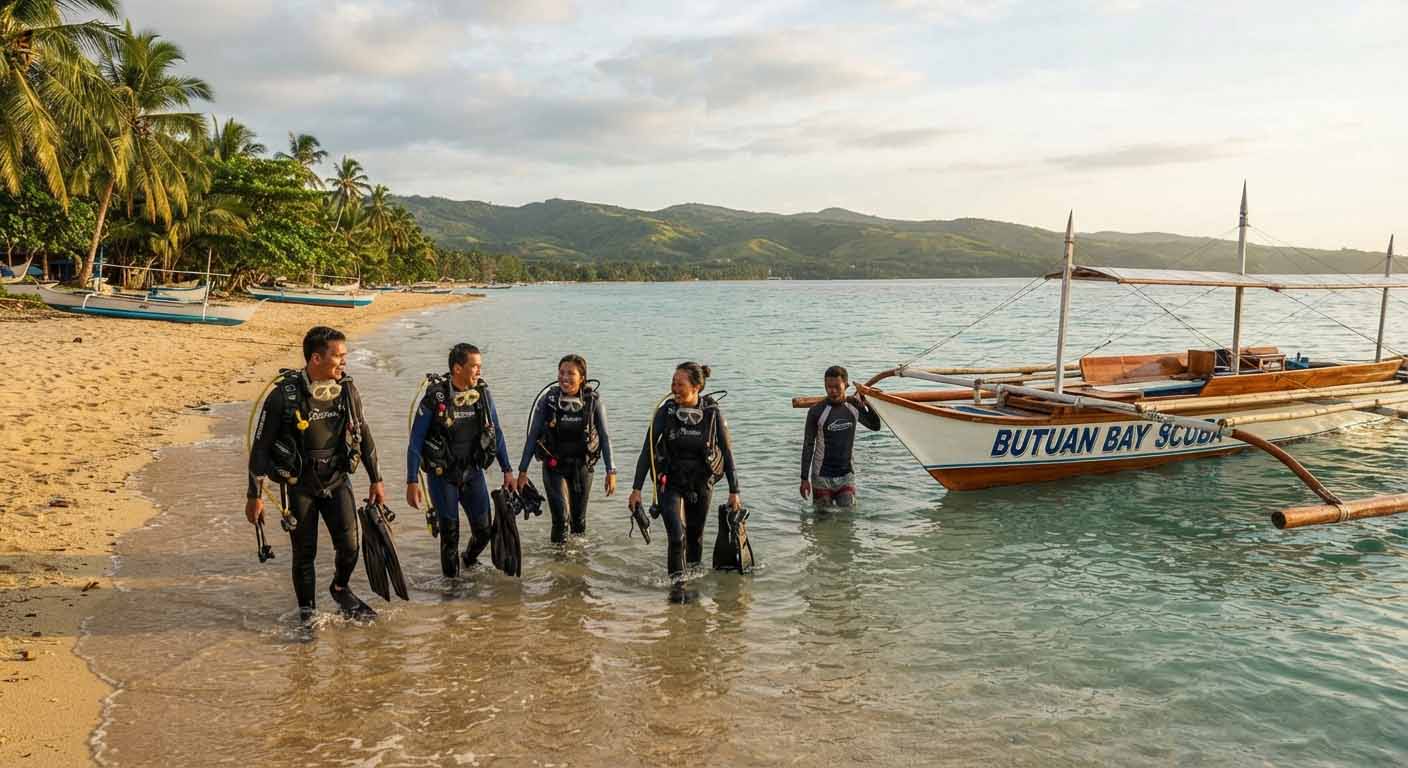
A local professional can match sites to certification level, recent experience, air consumption, and equipment setup. That judgment matters when currents strengthen or visibility drops. It also helps divers who bring a new regulator or recently serviced BCD. Arrange your dives with a local Butuan Bay divemaster and describe your experience honestly during the briefing.
After the cave walk, clean mud from boots, bags, and camera housings before they reach the dive boat. Fine grit can damage zipper teeth, O-ring grooves, and inflator mechanisms. Then rinse scuba equipment in fresh water and let it dry away from direct sun. This simple separation between land gear and dive gear prevents avoidable failures during the next day’s dives.
Punta Diwata adds a useful land-based experience to any diving bucket list Philippines itinerary. The cave walk shows another side of Agusan del Norte while giving divers time away from repetitive boat schedules. Plan around weather, use a local guide, and buy equipment based on reliability rather than appearance. With serviced gear and flexible timing, you can enjoy both the limestone coast and the underwater terrain of Butuan Bay.
Tags: Punta Diwata Cave, Agusan del Norte, Butuan Bay diving, Mindanao travel, scuba equipment, used scuba gear, DIN vs Yoke, cave safety, Philippines scuba tourism