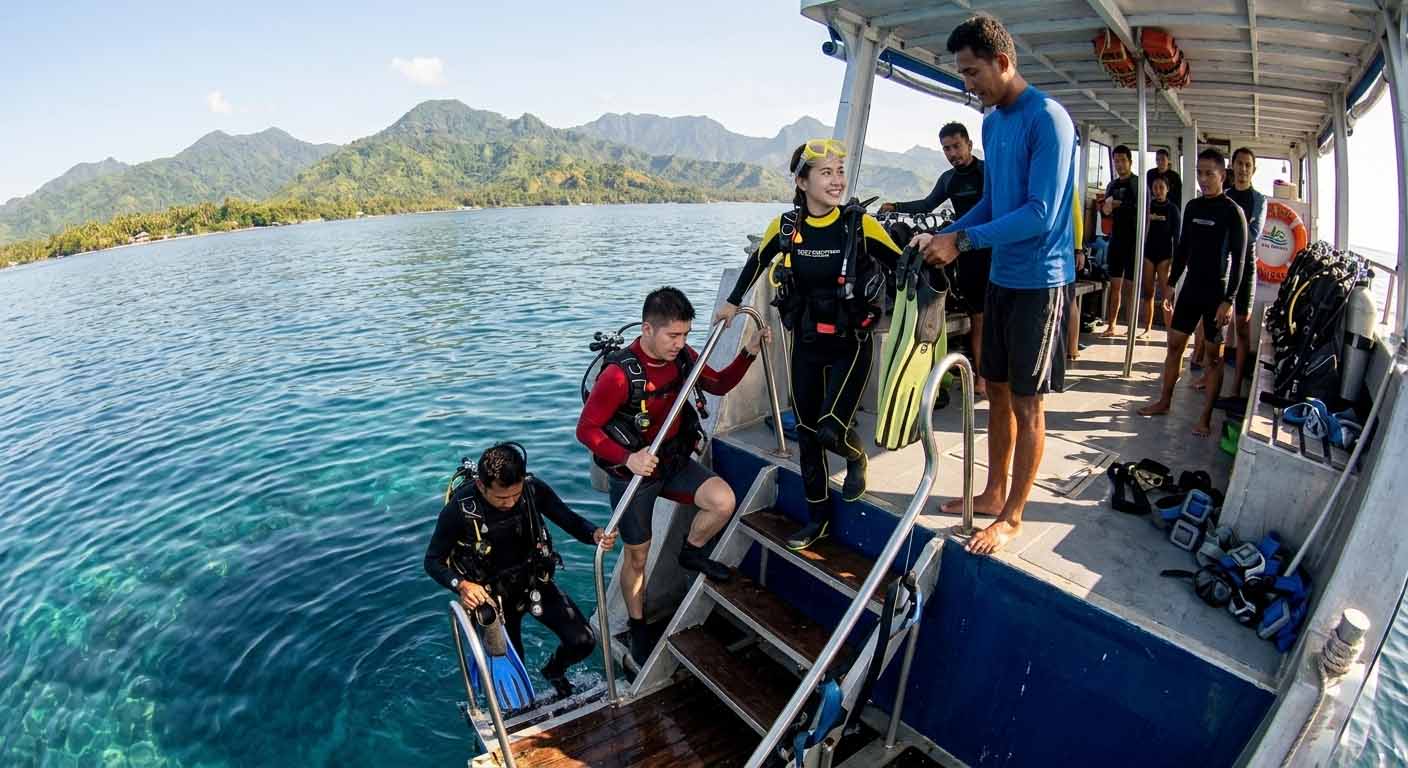

Scuba Diving in Mindanao: Discover Butuan Bay
Famous Philippine dive destinations such as Apo Reef and Boracay deserve their reputations, but their popularity can mean busy boats, crowded entry points, and heavily traveled reefs. Butuan Bay offers a different experience. Along the coast of Agusan del Norte, divers encounter dramatic walls, current-swept points, coral nurseries, and community-protected sanctuaries—often without another dive group in sight.
For adventure travelers, scuba diving in Mindanao is an opportunity to explore beyond the country’s established tourism circuit. Butuan Bay sits on Mindanao’s northeastern coast, opening toward the Bohol Sea and receiving nutrient-rich water from surrounding marine systems. Its underwater terrain supports hard and soft corals, reef fish, macro life, rays, and sea turtles across sites suited to different experience levels.
The region also belongs within a much larger marine landscape. The PADI profile of diving in Mindanao highlights the island’s broad range of species and underwater environments, while this Philippines destination guide for dive holidays places Mindanao within one of the world’s most biodiverse diving nations. Butuan Bay adds something especially valuable: accessible sites that still feel exploratory.
This is not a destination built around large resorts or tightly scheduled tourism packages. The rhythm is local, flexible, and connected to coastal communities. Divers stay near Carmen, travel to launch points by road, and plan each outing around tides, currents, weather, and site conditions. For certified divers who value discovery over nightlife, Butuan Bay can feel like the Philippines before mass tourism arrived.
Why Butuan Bay Is Mindanao’s Hidden Dive Gem
Biodiversity Without the Crowds
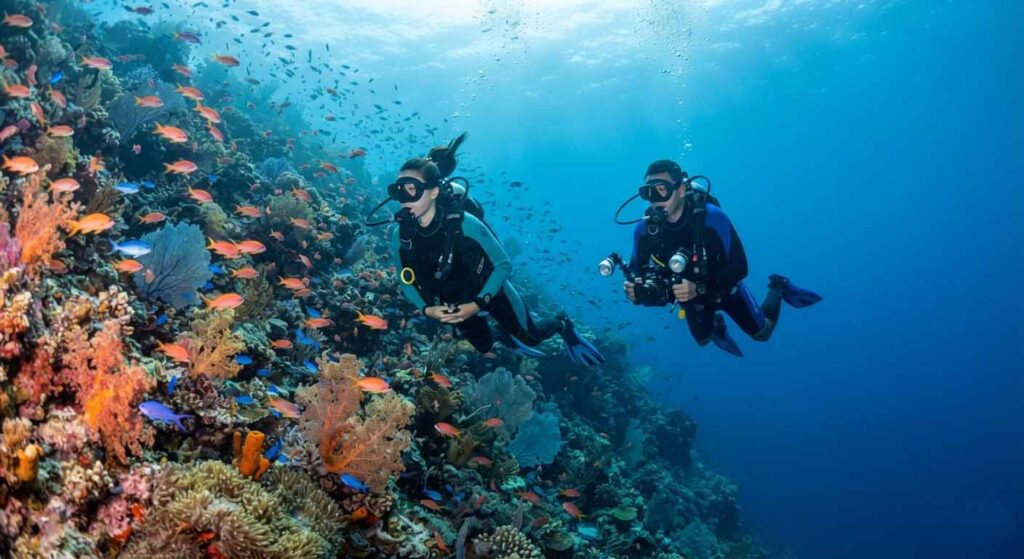
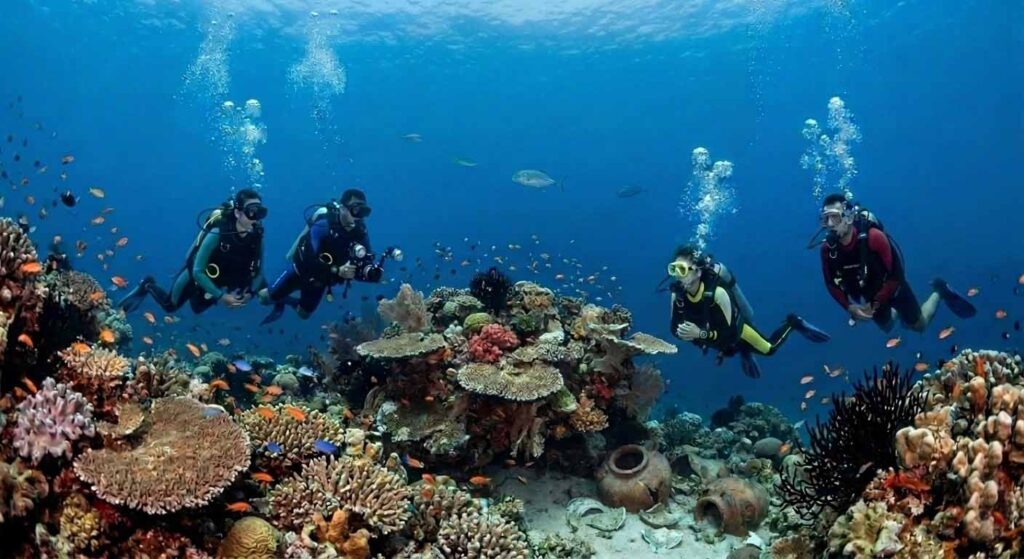
Butuan Bay’s appeal begins with variety. On a single trip, divers may move from a steep wall to a shallow coral garden, then enter a sanctuary where juvenile fish shelter among branching corals. Butterflyfish, angelfish, damselfish, fusiliers, snappers, sweetlips, moray eels, nudibranchs, and crustaceans are among the likely encounters. Patient observers may also find cuttlefish, scorpionfish, pipefish, and other well-camouflaged reef residents.
Dramatic Underwater Geography
The bay’s topography creates diving for several interests and skill levels. Some reefs descend gradually, giving newer divers time to adjust buoyancy and observe small marine life. Elsewhere, ledges and walls fall into deeper blue water, creating opportunities to watch schooling fish move along the reef edge. Current-exposed points deliver more energetic dives, with stronger water movement attracting active fish and larger passing species.
A Rising Eco-Tourism Destination
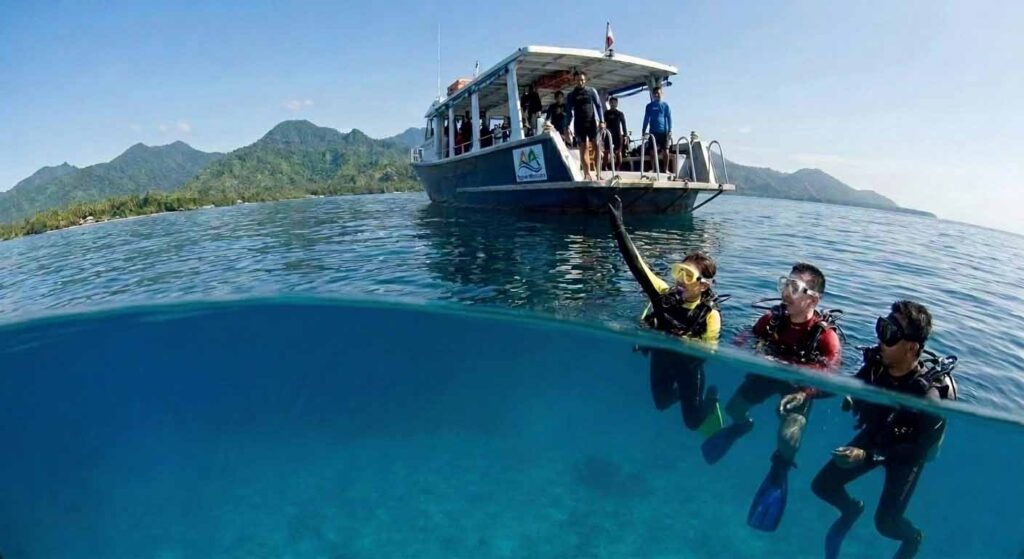
These contrasts make Agusan del Norte scuba particularly attractive to travelers seeking less-commercialized destinations. Divers are not simply checking off another famous Philippine island; they are helping build responsible tourism in an area where local operators, boat crews, guides, accommodation providers, and food businesses can benefit directly. Resources on exploring pristine, less-traveled Philippine islands also show why venturing beyond established hubs can produce more personal and rewarding dive experiences.
Encounters That Depend on the Ocean
Butuan Bay is wild enough that every dive can unfold differently. Visibility, current, plankton levels, and animal activity change with the tide and season. One morning may offer clear blue water and wide views down a wall; another may bring nutrient-rich conditions filled with feeding fish. That variability is part of the adventure, and divers who arrive with patience often enjoy the bay’s most memorable encounters.
Key underwater highlights may include:
- Dramatic drop-offs and reef ledges
- Hawksbill and green sea turtle encounters
- Schooling fusiliers, jacks, and snappers
- Coral gardens used as juvenile-fish habitat
- Macro subjects such as nudibranchs and crustaceans
- Current-driven drift dives for experienced divers
Explore the Best Butuan Bay Diving Sites
Balete Wall: A Descent into Deep Blue
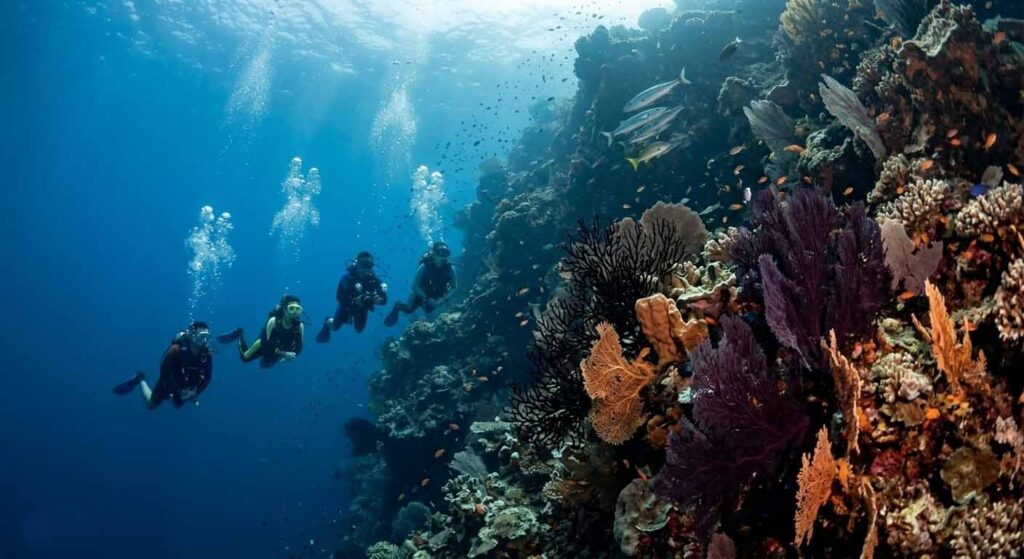
The celebrated Balete Wall Carmen dive site is defined by steep underwater structure and the feeling of hovering over open blue water. Divers can follow the reef face while looking into crevices for moray eels, shrimp, nudibranchs, and resting fish. Out toward the drop-off, fusiliers and other schooling species may pass in the current. Good buoyancy is essential, both for controlling depth and protecting corals along the wall.
Tagcatong Marine Sanctuary: A Coastal Nursery
The protected Tagcatong Marine Sanctuary dive site offers a gentler contrast to deeper walls. Its shallower reef habitat acts as a nursery for juvenile fish and provides feeding areas for larger residents. Slow diving works best here. By reducing fin movement and remaining close to a knowledgeable guide, divers can notice reef behavior that is easily missed, from territorial damselfish to small predators waiting beside coral heads.
Cahayagan Marine Sanctuary: Turtles and Coral Habitat
At the Cahayagan Marine Sanctuary in Butuan Bay, healthy habitat and community protection create promising conditions for turtles, reef fish, and invertebrates. Hawksbills may be seen searching coral surfaces for sponges, while green turtles are more commonly associated with seagrass feeding areas. Divers should keep several meters away, avoid blocking a turtle’s route to the surface, and never chase it for a photograph.
Bolihon Point: Current-Fueled Adventure
Experienced divers looking for greater energy should consider drift diving at Bolihon Point. Moving water can carry divers along the reef while schooling fish gather in current-facing areas. Because conditions may change quickly, this site rewards confident buoyancy, good air management, and close attention to the guide. Negative entries, streamlined positioning, and a delayed surface marker buoy may be required depending on the day’s plan.
These Butuan Bay diving sites can be combined according to certification, experience, sea conditions, and personal interests:
- Wall enthusiasts: Balete Wall
- Marine-life photographers: Tagcatong and Cahayagan
- Turtle watchers: Cahayagan and protected reef zones
- Experienced drift divers: Bolihon Point
- Mixed-experience groups: Shallow sanctuaries before deeper sites
Plan Your Agusan del Norte Scuba Adventure
When to Dive Butuan Bay
Mindanao has a tropical climate, but wind, rainfall, runoff, and local sea conditions still affect each diving day. The Mindanao dive-season and trip-mapping guide is useful for broader planning, while this overview of the Philippines’ tropical climate and seasonal visibility explains national patterns. Local guides remain the best source for current visibility, waves, tides, and site suitability.
Getting to Carmen, Agusan del Norte
Butuan City is the usual gateway, with road connections to Carmen and other coastal communities around the bay. Transfer times depend on traffic, departure point, and the location of the boat launch, so avoid building a tight schedule around arrival day. Carmen has a relaxed provincial atmosphere rather than a resort-town scene. Expect local restaurants, simple shops, friendly communities, and early starts shaped by weather and tide windows.
Choosing a Practical Place to Stay
Accommodation ranges from straightforward hotels and guesthouses to private rentals. The guide to lodging for scuba diving in Carmen, Agusan del Norte can help travelers compare practical bases near the dive area. Before booking, confirm transport arrangements, equipment storage, breakfast availability, mobile signal, and travel time to the launch point. A quiet room, reliable water supply, and space to dry gear can matter more than resort-style extras.
Preparing for Remote-Site Diving
Bring certification cards, recent dive details, travel insurance that covers scuba activities, and any required medical documentation. Divers should also discuss experience honestly with the operator, especially before wall or drift dives. Rental equipment may be available, but personal masks, dive computers, and exposure protection improve comfort. A reef-safe approach begins before entering the water: minimize disposable plastics, secure accessories, and ensure cameras or gauges cannot drag across coral.
A practical packing list includes:
- Certification card and digital backup
- Dive computer and spare battery
- Surface marker buoy and reel
- Lightweight exposure suit or rash guard
- Reef-conscious sun protection
- Reusable water bottle
- Dry bag for boat transfers
- Motion-sickness medication, if needed
- Small save-a-dive kit for personal equipment
Protecting Reefs Through Community-Led Diving
Sanctuaries Need Local Stewardship
The future of scuba diving in Mindanao depends on healthy reefs and communities that have meaningful reasons to protect them. The best Philippines marine sanctuaries are not merely boundaries on a map. They require local monitoring, fishing agreements, visitor education, enforcement, and long-term support. When divers hire local guides, use community boat services, and pay appropriate conservation fees, tourism becomes part of that protection system.
Give Turtles Space to Behave Naturally
Butuan Bay is particularly important for travelers hoping to encounter hawksbill turtles in the Philippines. The guide to why Butuan Bay is a haven for hawksbill turtles explains the connection between coral habitat and this critically endangered species. Responsible encounters mean approaching slowly, avoiding flash at close range, never touching the shell, and allowing turtles unrestricted access to feeding areas and the surface.
Make Every Dive Low Impact
Divers can also help guides document unusual sightings, damaged coral, discarded fishing gear, or changes in reef condition. Reviewing informed observations about Philippine coral reef health and marine fauna provides useful context, but local knowledge remains essential. Maintain neutral buoyancy, keep fins above the reef, refuse wildlife handling, and collect loose debris only when doing so is safe and will not disturb attached organisms.
Start Your Butuan Bay Journey
Butuan Bay offers what many experienced travelers now seek: dramatic underwater terrain, meaningful wildlife encounters, small-group exploration, and a direct connection to the people caring for the coast. Contact Butuan Bay Scuba to discuss certification level, preferred sites, equipment needs, accommodations, and current conditions. Come prepared to dive responsibly, follow local guidance, and discover an emerging Agusan del Norte destination whose greatest strength is that it still feels genuinely wild.