

Butuan Bay’s Unexplored Reefs: Smart Gear Choices
Butuan Bay’s Unexplored Reefs demand reliable gear. Compare new and used kits, valves, and safety tools, then plan your dive today!
Butuan Bay’s Unexplored Reefs offer a different challenge from established Philippine dive destinations. Site information can be limited, boat rides may be long, and local cylinder fittings can vary. Conditions also change with wind, tides, and rainfall. Before booking, review the best times to dive Butuan Bay and check official PAGASA weather information. Your equipment choices should match the location, not just your budget or preferred brand.
Butuan Bay’s Unexplored Reefs and Conditions
Reading Butuan Bay’s Unexplored Reefs
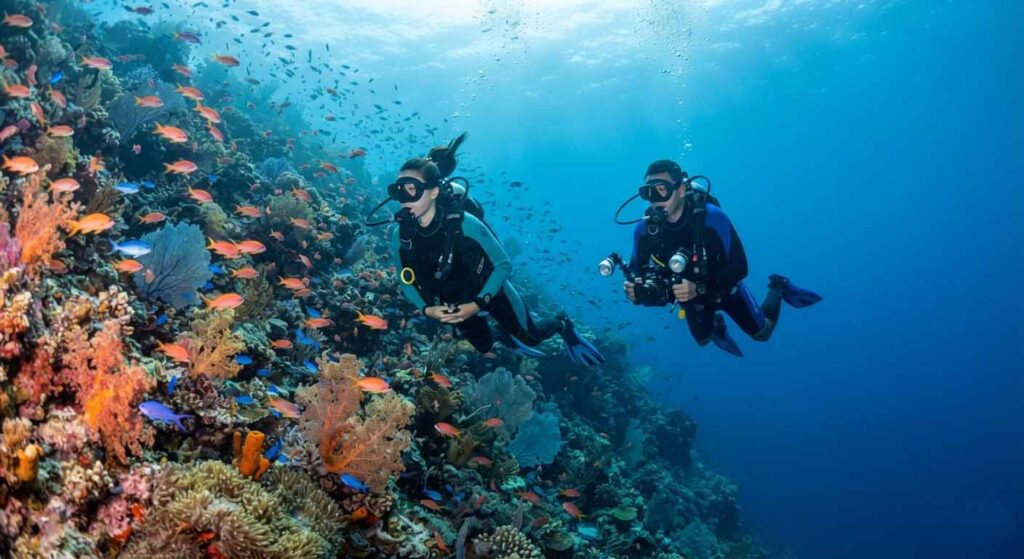
Butuan Bay combines sloping coral areas, walls, drop-offs, and current-exposed points. However, not every reef has permanent moorings or detailed maps. Divers should review the available Butuan Bay dive-site information before discussing routes with the operator. Ask about maximum depth, entry style, expected current, boat cover, and the planned exit procedure.
Visibility can shift after rain because rivers carry sediment toward the bay. Meanwhile, offshore sites may stay clearer but experience stronger water movement. The NOAA explanation of ocean currents provides useful background, although local briefings remain essential. A mild surface current can also differ greatly from the flow beside a wall.
Butuan Bay’s Unexplored Reefs require conservative planning. A diver may find excellent visibility at depth but reduced visibility near the exit. Therefore, carry an easy-to-read compass and monitor gas more often than usual. A computer with a bright display also helps when changing depth along an unfamiliar slope or wall.
Local knowledge matters because charts cannot show every fishing line, current split, or safe pickup area. Diving with a local Butuan Bay divemaster reduces guesswork. It also supports better reef practices promoted by the Philippine tourism platform and the Green Fins initiative.
Choosing New or Used Gear for Remote Dives
Butuan Bay’s Unexplored Reefs can expose weaknesses that remain unnoticed during easy resort dives. New gear offers a warranty, known service history, and predictable fit. Still, a carefully inspected used BCD or regulator can provide good value. Read this practical comparison of new versus used scuba gear before setting a budget.
Buy a mask new whenever possible because fit matters more than branding. Exposure suits also work best when correctly sized. However, used fins, weights, reels, and sturdy accessories often present less risk. The PADI equipment overview can help new buyers understand each component before comparing listings.
Used regulators and BCDs require more caution. Check service records, hose dates, mouthpieces, inflator operation, dump valves, and signs of corrosion. Avoid poorly documented products, especially life-support equipment. The guide to unbranded scuba gear risks explains why low prices can lead to service and parts problems.
Always include servicing costs in the purchase price. A cheap regulator may need a full overhaul, new hoses, and replacement gauges. So, ask a technician to inspect it before travel. Follow DAN equipment care guidance and confirm that parts are available locally. SSI training resources can also reinforce equipment knowledge and responsible ownership.

DIN vs Yoke for Butuan Bay Dive Logistics
DIN regulators screw directly into the cylinder valve. As a result, they protect the O-ring and handle higher pressures well. Yoke regulators clamp around the valve and remain common at many tropical operations. Neither system guarantees local compatibility, so ask the dive center which valves its cylinders use before packing.
A convertible DIN regulator often provides the most flexibility. You can fit a yoke adapter when the operator supplies compatible cylinders. However, the adapter adds bulk and can place the first stage closer to your head. This detailed DIN versus yoke regulator comparison covers pressure ratings, O-ring placement, and travel concerns.
Inspect adapters before every trip. Threads should turn smoothly, while O-rings should remain clean and undamaged. Also, avoid forcing a regulator onto a questionable valve. If the connection leaks during setup, change the cylinder or fitting instead of accepting a slow leak for a remote boat dive.
Divers buying used regulators should identify the exact first-stage model and service standard. Then, confirm that a qualified technician can obtain genuine parts. The British Sub-Aqua Club offers established diving guidance, but the boat operator still determines practical cylinder compatibility. A short message before departure can prevent a missed dive.
Safety Gear for Currents, Walls, and Boat Dives
Butuan Bay’s Unexplored Reefs may involve negative entries, drifting ascents, or pickups away from a fixed mooring. Therefore, each buddy team should carry a delayed surface marker buoy and spool. Ideally, every diver should know how to deploy one without losing buoyancy control or wrapping the line around equipment.
For wall dives such as Balete Wall in Carmen, depth awareness is critical. A computer alarm can warn against an accidental descent, but it cannot replace frequent checks. Carry a backup timing and depth method when profiles become demanding. Meanwhile, keep gauges positioned where you can read them quickly.
Boat-diving equipment should include a whistle, signal mirror, cutting tool, and bright surface marker. A compact light helps in low visibility or beneath ledges. For more exposed routes, consider a waterproof personal locator beacon that the operator can track. Review local Philippine Coast Guard safety information when weather or marine advisories may affect departures.
Discuss separation procedures before entering the water. Decide how long buddies will search underwater and when they will surface. The crew should know the planned runtime, maximum depth, and DSMB color. Reading about Philippine bangka boat-diving logistics also helps visitors understand boarding, equipment storage, and water-entry methods.

Packing, Servicing, and Final Pre-Dive Checks
Pack life-support gear in padded sections, and keep regulator dust caps dry. If flying, place computers, prescription masks, and difficult-to-replace parts in hand luggage. Remove batteries from powerful lights when airline rules require it. Meanwhile, protect mask skirts and hoses from sharp buckles or tightly packed metal accessories.
Schedule servicing several weeks before departure. This leaves time for parts, bench testing, and a shallow checkout dive. Do not service a regulator the day before travel unless necessary. Likewise, inflate the BCD overnight, test every dump valve, and check that the inflator disconnects without sticking.
At the boat, use a deliberate buddy check. Confirm cylinder pressure, valve opening, gas delivery, releases, weights, computer settings, and alternate-air placement. Then, breathe from both second stages while watching the pressure gauge. Any needle movement may indicate a valve or regulator problem that needs attention.
Finally, carry a small spares kit with suitable O-rings, fin straps, mask straps, cable ties, and regulator mouthpieces. However, never attempt technical repairs beyond your training. Contact Butuan Bay Scuba before the trip to confirm tank fittings, rental inventory, emergency oxygen, boat setup, and recommended personal equipment.
Exploring Butuan Bay’s Unexplored Reefs calls for sound judgment rather than the most expensive equipment. New life-support gear offers certainty, while serviced used gear can suit careful buyers. Confirm cylinder connections, carry visible surface signals, and test every item before boarding. With local guidance and a conservative plan, you can focus on the reef instead of preventable equipment problems.
WordPress Tags: Butuan Bay diving, scuba gear selection, used scuba equipment, new scuba gear, DIN regulators, yoke regulators, Mindanao scuba diving, boat diving safety, remote reef diving